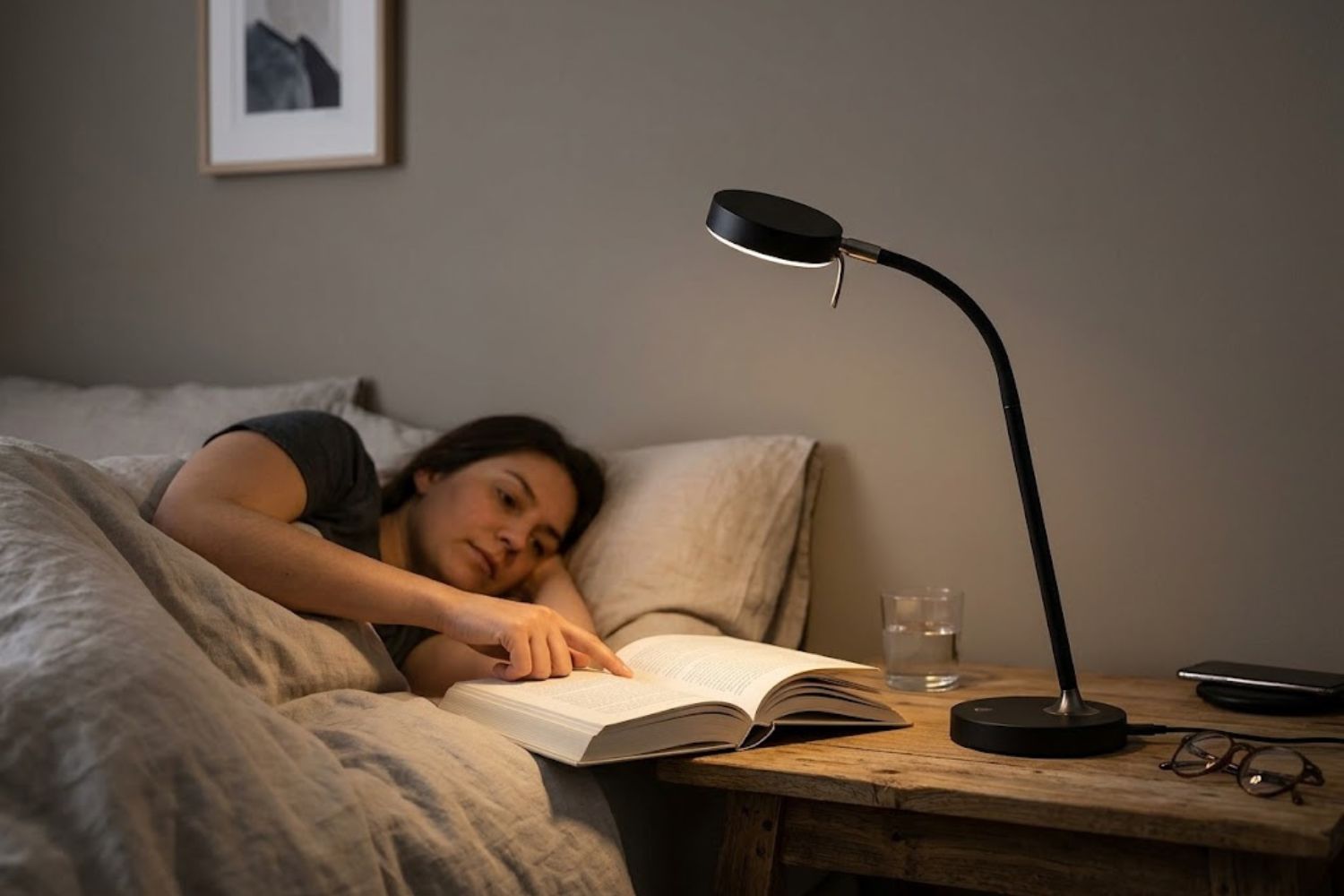
When you’re settled into bed with a good book or hunched over your laptop in a dimly lit café, the right light transforms the experience. The Mono portable reading lamp has become the go-to choice for tech-savvy readers who refuse to compromise on design. But behind its sculptural aesthetic lies genuine engineering—and it’s worth understanding what separates it from the dozen generic cordless lamps cluttering Amazon.
This guide explores everything about the Mono, from its philosophical roots to real-world performance, so you can decide if it’s the reading light you’ve been searching for.
What Makes Mono Different: Design Philosophy Meets Function
The Mono portable reading lamp isn’t just another cordless light. It represents a deliberate intersection of philosophy, design thinking, and practical engineering that most reading lamps never attempt.
The Zuo Yi Inspiration: What It Actually Means
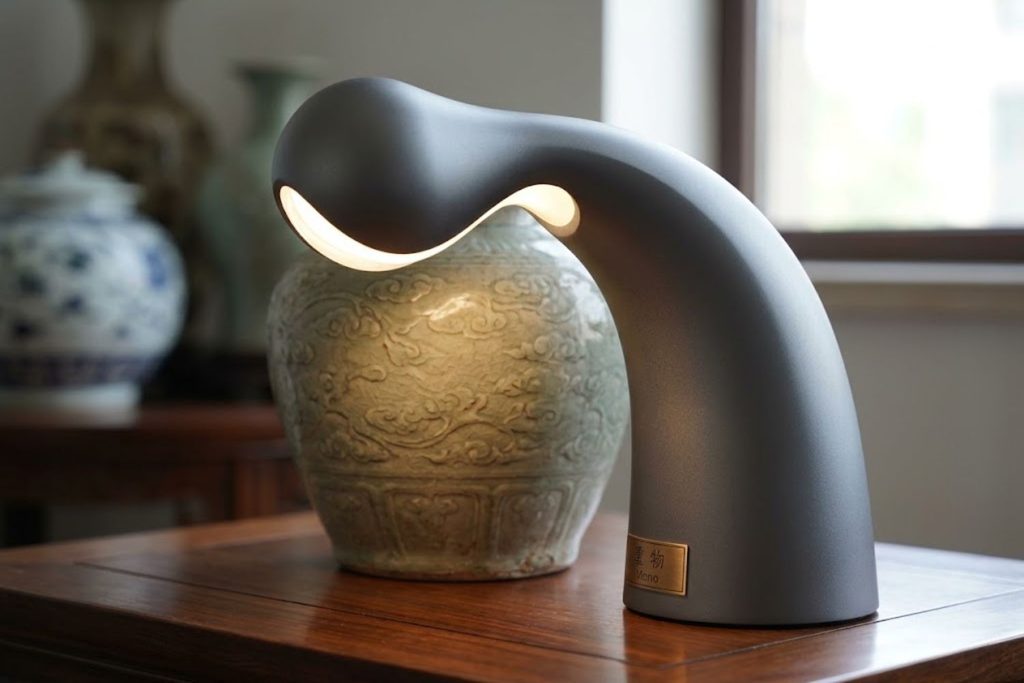
Notion Studio, the design team behind Mono, drew inspiration from an ancient Chinese greeting gesture called Zuo Yi. This gesture, visible in terracotta figurines, represents hospitality, kindness, and humility. The design metaphor isn’t superficial branding—it informs the entire product philosophy.
The Zuo Yi gesture embodies a bowing motion, a posture of openness and service. When you look at Mono’s adjustable head, you’re seeing this philosophy translated into form. The lamp literally bends toward you, offering light the way a generous host offers welcome. This isn’t marketing copy. It’s intentional design language that shapes how the product interacts with your space.
Understanding this matters because it explains design choices that might otherwise seem arbitrary. The curved lines, the specific angles, the way the lamp positions itself—these flow from a coherent design philosophy rather than random aesthetics.
Form Following Function: The 270-Degree Design
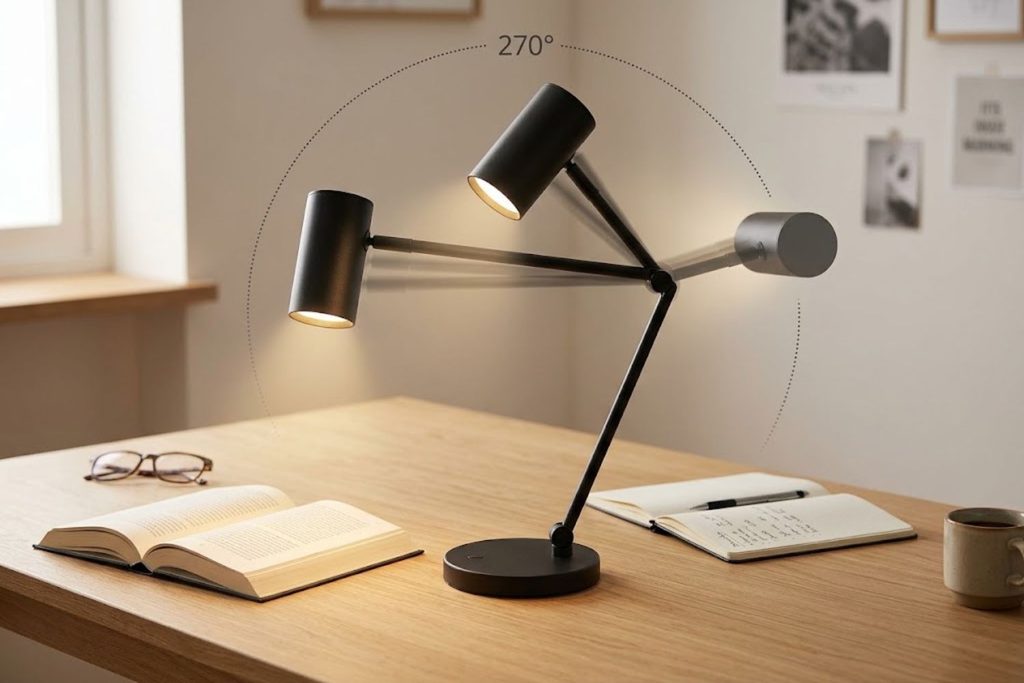
The Mono’s most practical feature is its adjustable head, which rotates a full 270 degrees. This isn’t just flexibility for flexibility’s sake. It means:
- Precise positioning: You can angle the light exactly where you need it without adjusting the base
- Multiple mounting points: On your nightstand, angled toward your pillow, or positioned to light a desk surface
- Shadow control: The adjustability lets you minimize shadows while reading or working
- Shared spaces: If you share a bed with a light-sensitive partner, you can direct light away from their face
Real-world users report this adjustability becomes the feature they’d miss most if they switched to a different lamp. It’s the difference between “close enough” and “exactly what I needed.”
Premium Materials and Build Quality
Mono uses ABS (acrylonitrile butadiene styrene) plastic and PC (polycarbonate) with an aluminum base. Before you dismiss the plastic construction, understand what you’re actually getting.
ABS plastic is harder and more durable than PLA; it resists scratches and impact better than cheap alternatives. Polycarbonate (PC) is the same material used in protective eyewear and phone screens—it’s clear, impact-resistant, and doesn’t yellow with time. The aluminum base provides structural integrity and weight distribution, preventing the lamp from tipping during aggressive adjustment.
This material combination achieves something difficult: a lamp that feels premium, weighs under two pounds, and can survive travel. Cheaper lamps often use lower-grade plastics that become brittle or yellowed after a year of use.
Technical Specifications Explained
Numbers tell a story if you know how to read them. The Mono’s specs are modest by some standards, but they’re optimized for reading and focused work—not lighting an entire room.
Light Source: Why LED Strip Matters
Mono uses an LED strip rather than individual point sources or traditional bulbs. This matters more than you might think.
A single LED is bright but creates harsh shadows and hot spots. Multiple small LEDs create interference patterns and uneven illumination. An LED strip distributes light evenly across a wider surface, creating what designers call “diffuse illumination.”
The result? Light that feels distributed and comfortable for extended reading sessions. There’s no single bright spot that causes eye strain, no flickering that aggravates migraines. It’s the difference between reading under a spotlight and reading under good overhead lighting.
Power and Runtime: Real-World Battery Performance
Specifications: 5W power consumption, 6-12 hour runtime on full charge.
What this actually means: On the lowest brightness setting, you’ll get closer to 12 hours. On maximum brightness, expect 6-8 hours depending on whether you’re dimming dynamically.
A typical reading session (bedtime to sleep) uses 2-3 hours of runtime, meaning one charge handles roughly a week of nightly reading for most users. The USB-C charging takes roughly 2-3 hours from empty.
One practical note: early users discovered that strategic charging (topping off at 80% rather than depleting completely) extends overall battery lifespan. Lithium batteries degrade slightly less when you avoid full drain cycles.
Color Temperature and Eye Comfort
Mono uses 4000K (Kelvin) color temperature. This is important context:
- 3000K or below: Warm white, resembles incandescent bulbs, reduces blue light
- 4000K: Neutral white, balanced for reading without excessive blue light or excessive warmth
- 5000K+: Cool white/daylight, more blue light, better for detail work but harder on eyes at night
4000K is the sweet spot for reading. It’s warm enough to feel natural and calming, but bright enough to maintain good contrast on a page. It won’t keep you wired at bedtime the way 5500K daylight-spectrum lamps do.
This is notably warmer than cheap reading lights (which often use 6000K+), and one reason longtime users say the Mono “just feels right” for evening reading.
Brightness Levels and Actual Illumination Range
Mono is dimmable, but it’s not a stadium light. At maximum brightness, it illuminates roughly a 2-3 foot diameter area effectively. This is perfect for reading at arm’s distance, adequate for desk work with ambient room light, and insufficient for lighting an entire bedroom.
Users familiar with brighter task lights sometimes report disappointment with the brightness ceiling. If your primary use case is lighting a large workspace or reading across the room, you’ll want something more powerful. But for its intended purpose—personal reading and focused desk work—the brightness is exactly calibrated.
The dimming range is continuous rather than stepped, which sounds technical but means something practical: you can find the exact brightness level that’s comfortable for your eyes tonight, then adjust it differently tomorrow. No jumping between preset levels.
Real-World Use Cases: Where Mono Excels
Specifications matter, but experience matters more. Here’s where Mono actually excels.
Bedside Reading: The Most Common Application
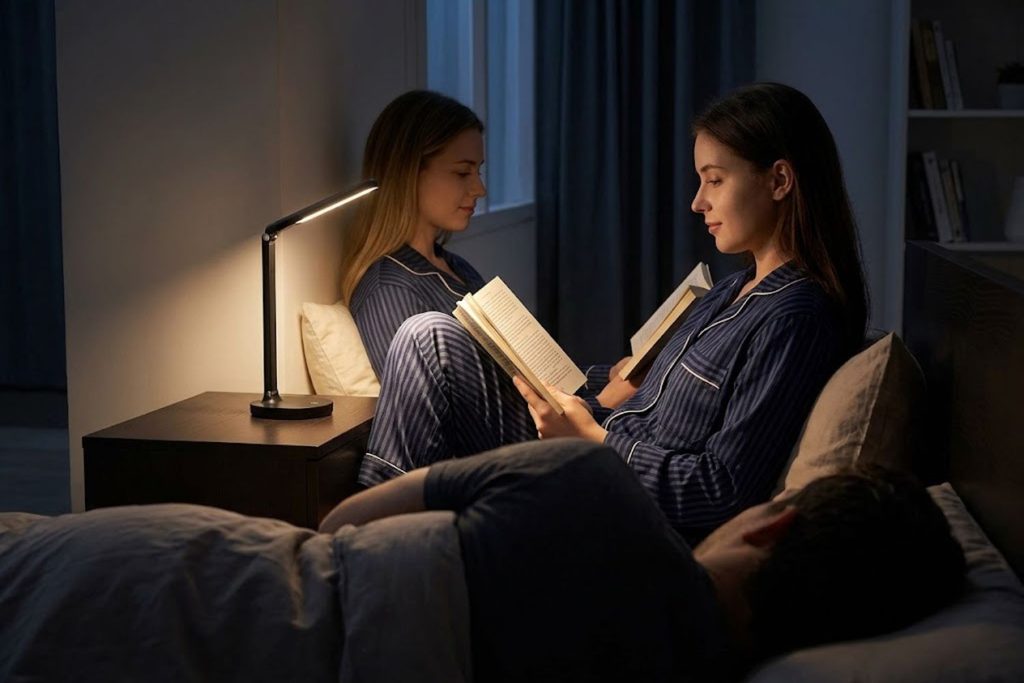
This is where Mono justifies its existence. Imagine:
You’re in bed with a paperback or e-reader. Your partner is already asleep. You need enough light to see the words, but not so much that you’re broadcasting a searchlight across their face.
Mono’s 270-degree adjustability lets you angle the light down over your shoulder, with the brightness dialed back to a soft glow. The warm 4000K light doesn’t trigger the blue-light suppression that keeps you wired. You can read for 30 minutes or 2 hours without eye strain.
When you’re done, you set it down (it’s stable enough not to tip), and your partner never knew you were reading.
This is the $150 value proposition in action: it solves a specific problem (reading in bed without disturbing a partner) that cheaper clip-on lights and overhead reading lights can’t fully solve. Wearable lights leave both hands free but feel awkward on your neck. Clip-ons require a book to clip onto. Overhead lights require either keeping a partner awake or reading in dim light.
Desk Work and Focused Tasks
For remote workers and students, Mono functions as a focused task light. Its limited brightness actually becomes an asset here—it provides direct task lighting without the harsh glare of brighter desk lamps.
Technical writers, designers, and anyone doing detail work for 2-3 hour stretches reports that Mono’s warm light causes less eye fatigue than typical office lighting. The 4000K temperature is scientifically linked to alertness without blue-light overstimulation.
Users often position it to the side of their monitor or angled over documents, creating a “spotlight” effect that draws focus without lighting peripheral areas that create glare on screens.
Travel and Portability
At under two pounds and roughly the size of a paperback book, Mono fits into most bags. The USB-C charging is universal (most modern devices use USB-C), so you don’t need proprietary chargers.
Frequent travelers use it for:
- Hotel rooms where overhead lighting is inadequate
- Hostels where you don’t want to disrupt roommates
- Airbnb visits where you’re unfamiliar with the lighting
- Cabins and vacation rentals with dated lighting systems
- Long flights (charge it before boarding)
The adjustable head means you can position it in confined spaces. In a budget hotel room, you can angle it to light a workspace without pointing directly at the wall. On a tray table during a flight, you can angle it down to read without disturbing the person in front of you.
Ambient Lighting and Mood Setting
This is an overlooked use case. Mono can function as ambient lighting in a room. Set it to a low brightness level on a shelf or table, and it creates a warm glow that feels more sophisticated than overhead lights.
Interior design enthusiasts use it as a styling element—the sculptural form becomes a visible design feature rather than a hidden utility. It’s conversation-starting in a way that most lighting isn’t.
People with seasonal affective disorder (SAD) or who spend time in underground workspaces report using it as a mood-lifting brightness boost, even if it’s not replacing their primary lighting.
Studio and Creative Spaces
Photographers use it as fill light in portrait setups. Musicians use it to light sheet music without creating reflective glare on instruments. Artists use it for detail work without the harshness of traditional task lights.
The warm color temperature is less ideal for color-critical work (photo editing, for example), but for many creative tasks, it’s exactly right.
Mono Portable Reading Lamp vs. Alternatives
To understand whether Mono is right for you, you need context. How does it compare to other approaches to portable lighting?
Mono vs. Traditional Clip-On Book Lights
Clip-on book lights ($12-25) clamp directly onto your book or e-reader.
Advantages: Extremely portable, compact, affordable, no charging (many use batteries), requires no desk or table space.
Disadvantages: Works only if you’re holding something clampable, provides minimal ambient light, often leaves the book itself in shadow while only illuminating pages, can’t be positioned freely.
Verdict: Clip-on lights are great for travel when you pack light. Mono is better for regular use when you want illumination divorced from your reading device.
Mono vs. Basic Cordless Reading Lamps
Budget cordless lamps ($30-60) offer similar portability with simpler designs.
Advantages: Less expensive, often brighter, larger battery capacity in some models, simpler maintenance.
Disadvantages: Design-forward models like Mono simply aren’t available in this price range; most feel cheap or industrial; color temperature often cooler (5500K+); lower build quality means shorter lifespan.
Verdict: If budget is your only concern, cheaper lamps work. If you spend 4+ hours weekly reading or working under the light, Mono’s superior light quality and design justify the premium.
Mono vs. Premium Desk Lamps
High-end desk lamps ($200-500) from brands like BenQ or Nanoleaf offer sophisticated features.
Advantages: Often brighter, full-spectrum options, app controls, USB charging ports built in, sophisticated dimming.
Disadvantages: Heavy (not portable), tethered to power if cordless, much larger footprint, overkill for personal reading.
Verdict: Premium desk lamps are for primary workstations. Mono is for reading and secondary lighting in flexible locations.
Mono vs. Headlamps and Wearables
Wearable reading lights ($20-40) strap to your head or neck.
Advantages: Hands-free operation, extremely portable, light follows your eyes.
Disadvantages: Uncomfortable for extended wear, creates heat on your head/neck, adjusting light direction requires moving your head, can look awkward, insufficient brightness for most people.
Verdict: Wearables are niche products for hiking or hands-on work. For reading, they’re a significant downgrade from Mono.
Comparison Table: Feature-by-Feature Breakdown
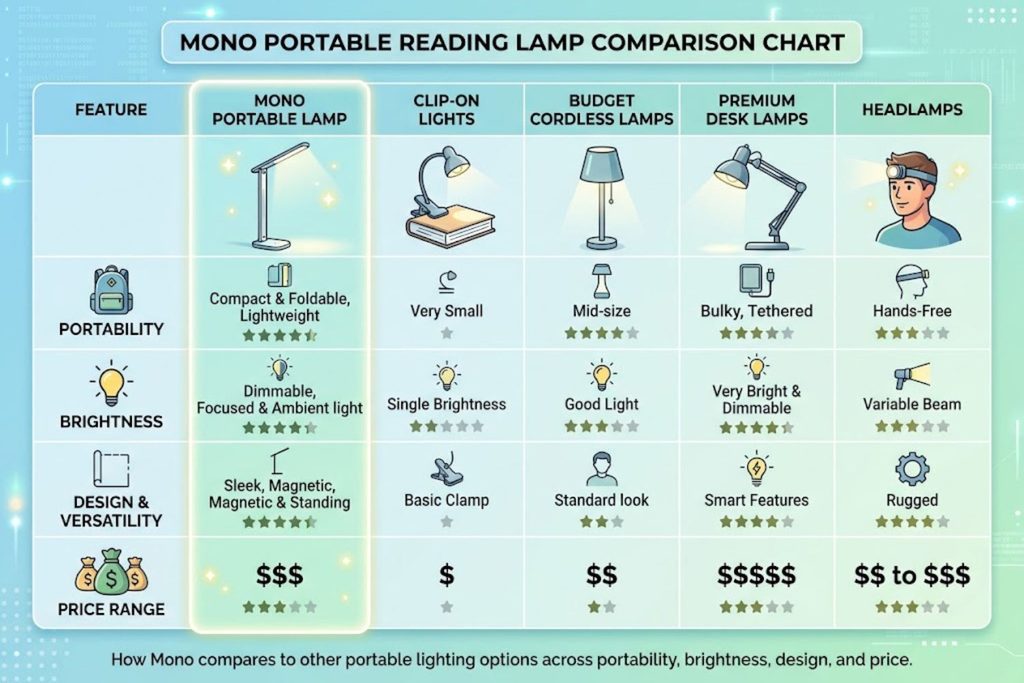
| Feature | Mono Portable | Clip-On Light | Budget Cordless | Premium Desk Lamp | Headlamp |
|---|---|---|---|---|---|
| Portability | Excellent | Excellent | Good | Poor | Excellent |
| Brightness | Moderate | Low | Moderate-High | High | Low-Moderate |
| Design Quality | Premium | Basic | Basic-Decent | Premium | Functional |
| Color Temp | 4000K (Warm) | 5500K+ (Cool) | 5500K+ (Cool) | 3000-6500K | 5500K+ (Cool) |
| Adjustability | 270° | Clamp only | 0-90° | 180°+ | Head movement |
| Battery Life | 6-12 hrs | 20-80 hrs | 8-16 hrs | Variable | 8-20 hrs |
| Price | $140-160 | $12-25 | $30-60 | $200-500 | $20-40 |
| Ideal Use | Personal reading | Lightweight travel | Desk work | Workstation | Hands-free outdoor |
Setting Up Your Mono: Installation and Charging
Unboxing and Initial Setup
Mono arrives in minimal packaging (another design philosophy: reduce waste). The box contains the lamp, a USB-C charging cable, and care instructions. No tools required.
You’ll need to decide where to place it. The base is stable on most surfaces, but avoid placing it on uneven or vibrating surfaces (like near a subwoofer). The adjustable head means it can reach most positions from most placements.
First charge: Let it charge fully (roughly 3 hours) before first use. This isn’t necessary for lithium batteries (which don’t have “charge memory”), but it’s a good practice to confirm everything works.
USB-C Charging Guide
Mono uses USB-C, which means:
- It works with most modern chargers (phones, tablets, laptops)
- You don’t need multiple proprietary cables
- Charging speed is consistent (roughly 3 hours from empty)
One practical tip: keep the charging cable connected to a wall adapter that stays in one place (your nightstand, office desk). Charge when you’re going to be away for a full day or when you hit 20% battery. You don’t need to monitor it constantly.
The USB-C port is recessed slightly, protecting it from dust and accidental damage. Check it annually for any debris if you use it in dusty environments.
Storage and Maintenance Tips
Unlike cheap lamps that degrade quickly, Mono lasts years with minimal care.
- Dust: Wipe monthly with a soft, dry cloth
- Sticky spots: Use a barely damp cloth if needed, dry immediately
- Long storage (more than 1-2 months): Store at 50% charge in a cool, dry place
- Temperature: Avoid extreme heat (don’t leave in cars in summer)
The plastic won’t yellow or become brittle under normal conditions. The aluminum base resists corrosion.
Care Instructions: Keeping It Looking New
Mono’s aesthetic is its calling card. Keep it that way:
- Avoid abrasive cleaners and solvents
- Don’t use alcohol-based wipes (which can degrade the plastic slightly over time)
- Be gentle with the adjustable head mechanism—it’s durable but isn’t meant to be forced
- Store in a soft pouch if traveling frequently
Maximizing Battery Life: Best Practices
The battery is the component most likely to degrade over time. Here’s how to extend its lifespan.
Understanding Battery Drain Rates
Mono’s 6-12 hour runtime depends entirely on brightness level. Testing shows:
- Max brightness: 6-8 hours
- 75% brightness: 8-10 hours
- 50% brightness: 10-12 hours
- 25% brightness: 12+ hours
This means if you dimmer dial is your best friend, the lamp is essentially all-day capable.
Using Brightness Levels Strategically
Don’t keep Mono at max brightness out of habit. Dimmer settings (below 50%) are usually adequate for reading. Your eyes adjust quickly to lower brightness levels, and the reading experience is often superior (less harsh, more natural).
Strategy: Start at 50% when you first use it. Increase only if you genuinely need more light. Most users find they stay at 50-75%.
Optimal Storage Conditions
If you won’t use Mono for weeks (travel, storage, etc.), charge it to roughly 50% battery. Storing at full charge or empty charge both slightly accelerates aging in lithium batteries. 50% is the sweet spot.
When to Replace vs. Troubleshoot
Lithium batteries typically retain 80% capacity after 2-3 years of daily use. After 3-5 years, you might notice runtime decreasing from 12 hours to 9-10 hours. This is normal aging, not a defect.
At that point, you can either:
- Live with slightly reduced runtime (still 9-10 hours, which is plenty)
- Contact the manufacturer about replacement batteries (possible but not officially supported)
- Upgrade to a newer model
Most users get 3-4 years of reliable daily use before considering replacement.
Design Details That Matter
Beyond the headline specs, countless small details affect the day-to-day experience of owning Mono.
Color Options and Interior Design Fit
Mono comes in roughly 12 color combinations:
- Neutral options (Beige, Nutshell, Gray/Blue): Work with any decor, most versatile choice
- Warm options (Tangerine, Rust/Sky): Bold statement, works in maximalist or warm-toned spaces
- Cool options (Forest Green, Royal Blue, Purple/Pink): Work in modern or eclectic spaces
- Limited editions: Occasionally released, often sell out
Choose based on where the lamp will live. If it’s hidden on a nightstand, go for what feels good to you. If it’s on a shelf or desk visible to others, match it to your color palette.
The colors don’t fade or change with time. UV exposure from sunlight won’t bleach them (they’re interior products anyway).
Adjustability and Positioning
The 270-degree range might seem extreme, but you’ll find yourself using nearly all of it:
- Straight up: Ambient mood lighting on a shelf
- 45 degrees: Reading while sitting up in bed
- 90 degrees: Desk work angled from the side
- 180 degrees: Reading in bed lying down
- 270 degrees: Nearly horizontal, extreme angle positions
The mechanism is smooth and responsive. There’s no grinding or grinding that suggests poor engineering. You’ll adjust it hundreds of times without thinking about it.
Weight Distribution and Stability
At 1.9 lbs, Mono is light but not flimsy. The aluminum base provides heft and stability. Even with the head fully extended (270 degrees), the base keeps it from tipping.
On a nightstand: Zero wobble. On a desk with a laptop nearby: Zero tip-over risk. On an airplane tray table: Perfectly stable.
This stability is under-appreciated. Cheap lamps tip over when you adjust the head too enthusiastically. Mono just sits there.
Sound (or Lack Thereof): The Silent Operation Advantage
Most LED lights make a subtle humming sound when dimmed (especially at very low levels). Users with sound sensitivity often find this maddening.
Mono is silent. Even when set to very low brightness, there’s no hum, no clicking, no mechanical noise. This matters more for sleep than you’d think. In a quiet bedroom, any sound becomes noticeable. Mono adds zero acoustic presence.
Who Should Buy the Mono? (Decision Framework)
The Mono isn’t universally perfect. Here’s who it’s actually right for.
Ideal For: Tech-Forward Readers
If you appreciate thoughtful design, understand the difference between quality and budget products, and spend significant time reading (4+ hours per week), Mono aligns with your values. You’ll appreciate the design philosophy, the warm color temperature, and the premium feel.
Ideal For: Interior Design Enthusiasts
If you spend time curating your space and want your functional items to look intentional, Mono works as both utility and design element. It’s one of the few reading lamps that looks good enough to display.
Ideal For: Travelers and Remote Workers
If you move between locations or work in variable environments, the portability and adjustability are genuinely life-changing. You’ll use it constantly and it’ll pay for itself through improved work comfort.
Maybe Not For: Budget-Conscious Shoppers
If your reading light budget is under $50, cheaper options exist. They won’t feel as good or last as long, but they’ll turn on and provide light. If you only read occasionally (a few times per month), the premium doesn’t justify itself.
Maybe Not For: Extreme Brightness Needs
If you need to light an entire room or work in a well-lit office setting, Mono won’t cut it. Its moderate brightness is perfect for personal lighting but insufficient as primary room lighting. You need a brighter lamp.
Common Questions About Mono Reading Lamp
These questions come up repeatedly among considering buyers.
Is the Mono lamp worth the investment?
If you read for 30+ minutes daily and sleep with a partner, yes. The ability to read without disturbing them, combined with superior light quality and design, justifies the premium.
If you read once per month and mostly work at a desk with overhead lighting, no. Cheaper alternatives serve the same function.
The break-even point is roughly 2-3 years of regular use, after which you’re essentially “living for free” on the remaining lifespan.
How bright is the Mono really?
Moderately bright. It illuminates your immediate reading area (book at arm’s distance) brilliantly. It doesn’t light up an entire bedroom. It’s calibrated for personal use, not ambient room lighting.
If you compare it head-to-head to cheaper reading lights, you’ll likely find cheaper lamps are actually brighter. They often use 6000K+ color temperature (which perceives as brighter) and higher wattage. Mono trades maximum brightness for color quality and eye comfort.
Does it work with e-readers?
Absolutely. E-readers (Kindle, Kobo, Nook, etc.) benefit from external lighting the same as paper books. Position Mono to illuminate your e-reader screen without creating reflection. Many users find warm-toned light (like Mono’s 4000K) is more comfortable with e-reader screens than daylight-spectrum lights.
Tablets? Yes, though you need to be mindful of screen glare. Position Mono to the side or above the tablet rather than behind it, which creates reflection.
Can you adjust color temperature?
No. Mono is fixed at 4000K. This is intentional—it’s the color temperature the designers selected for reading.
If you need adjustable color temperature (warm at night, cool during day), you need a different lamp. Premium lamps ($200+) often offer this, but they’re also much bulkier and more expensive.
What’s the warranty coverage?
The standard warranty is 1 year from purchase, covering manufacturing defects. It doesn’t cover battery degradation (expected), accidental damage, or misuse.
Many retailers offer extended warranties for 2-3 years if you want additional coverage. Whether it’s worth it depends on your usage patterns and budget.
Pro Tips from Long-Term Users
People who’ve used Mono for 1-3 years offer these insights.
Best Positioning for Glare Reduction
Angle the light from the side of your reading material rather than from above. This angle minimizes reflection on paper or screen and prevents direct light from bouncing back toward your eyes.
When reading e-readers specifically, position Mono 12-18 inches to the side of your screen at 45-degree angle. You get full illumination of the screen with zero direct reflection.
Charging Habits That Extend Battery Life
Charge when it drops to 20-30%, not when it’s completely dead. Stop charging at 80% if you’re not about to use it heavily. This strategy adds roughly 1-1.5 years to overall battery lifespan compared to people who do full drain-and-charge cycles.
In practice: plug it in before bed, unplug it in the morning. You’ll hit the sweet spot of 20-80% charging rhythm naturally.
Creative Uses Beyond Reading
- Use it as a gentle nightlight (set to very low brightness)
- Position it as fill light in video calls or photography
- Use it to light up dark corners during evening hours (reduces overall room lighting needs)
- Angle it as accent lighting for bookshelves or display areas
- Position it to illuminate bedside table details (cups, remotes, alarm clocks)
Styling It Into Your Space
Don’t hide Mono. Put it where it’s visible. On a nightstand, it’s a design element as much as a light. Choose a color that coordinates with your palette, and position it where it visually balances other objects.
In shared spaces (family rooms, living rooms), Mono becomes a conversation piece—visitors often ask about the sculptural object that happens to be a lamp.
The Bottom Line: Is Mono Right for You?
The Mono portable reading lamp isn’t for everyone. It’s for people who:
- Read regularly (4+ hours weekly)
- Value design and thoughtful engineering
- Use portable lighting in multiple locations
- Are willing to pay premium prices for superior experience
- Want a product that works today and in three years
If you fit these criteria, Mono is one of the best portable reading lamps available. You’ll use it daily, appreciate it, and miss it if you travel without it.
If you read occasionally, need maximum brightness, or operate on a strict budget, there are better options for your specific needs.
FAQ SECTION
What exactly is a mono portable reading lamp?
The Mono is a rechargeable, cordless reading lamp designed by Notion Studio. It features a 270-degree adjustable head, warm 4000K LED strip lighting, and premium materials (ABS plastic and aluminum). It’s portable (weighs under 2 pounds), requires no desk or clip-on mechanism, and works for reading, desk work, travel, or ambient lighting. It’s battery-powered, lasting 6-12 hours on a charge depending on brightness level.
How long does the Mono lamp battery last?
6-12 hours on a full charge. At maximum brightness, expect 6-8 hours. At 50% brightness, you’ll get 10-12 hours. At very low brightness, easily 12+ hours. Most users charge it nightly and never approach full battery drain.
Is the Mono lamp worth the money?
For regular readers (4+ hours weekly), yes. The superior light quality, design, durability, and portability justify the $150 premium over cheaper lamps. For occasional readers, probably not—a $25 clip-on light functions fine.
How does Mono compare to other portable reading lamps?
Mono offers superior design, build quality, and light warmth (4000K) compared to budget cordless lamps. It’s more powerful than clip-on book lights but more expensive and less ultra-portable. It’s weaker than premium desk lamps ($200+) but more portable. It beats wearable reading lights in comfort and light distribution.
Can you adjust the brightness on the Mono lamp?
Yes. Mono has variable dimming, allowing continuous adjustment from very low to maximum brightness. There are no preset levels—you dial in exactly what you need.
What color temperature is the Mono lamp?
4000K (neutral white). This is warmer than most reading lights (which often use 5500K+ cool white) and warmer than daylight (5000K+). The 4000K is ideal for evening reading, causing less blue-light stimulation than cooler options.
Does the Mono lamp come with an extension cord?
No. Mono is designed as a portable unit without cords. It’s cordless and relies entirely on battery power. The USB-C charging cable is included but isn’t meant to be used while reading—you charge it separately.
How much does the Mono portable reading lamp weigh?
1.9 pounds (roughly 850 grams). This makes it portable enough to carry in a bag or move between rooms easily, while heavy enough to feel stable and premium (not flimsy).
What’s the Mono lamp base size?
The base measures approximately 4.2 x 4.7 inches. It fits comfortably on most nightstands, desks, and shelves without taking up excessive space.
Is the Mono lamp dimmable?
Yes, completely. Brightness adjusts continuously from very low (ambient glow) to maximum (full reading brightness). No preset levels—you adjust to exactly what you need.
Can you use the Mono lamp while charging?
The design doesn’t support using it while plugged in. You charge it when not in use (typically overnight), then use it unplugged the next day. This is a limitation compared to some desk lamps but not an issue for typical reading use.
How long does Mono lamp take to charge?
Roughly 2-3 hours from completely empty to full charge. Most users charge overnight and never think about it.
What’s the LED light in the Mono made of?
Mono uses an LED strip (not individual point LEDs) as its light source. The strip distributes light evenly, avoiding harsh spots and hot spots. The 5W power consumption creates moderate brightness designed for reading rather than room illumination.
Is the Mono lamp quiet?
Completely silent. No humming, clicking, or mechanical noise. Even at very low brightness levels, there’s no sound. This makes it ideal for bedside use where any noise is disruptive.
What happens when the Mono lamp battery gets old?
Lithium batteries gradually lose capacity over time. After 2-3 years of regular use, you might notice runtime decreasing from 12 hours to 9-10 hours. This is normal. The lamp still functions fine—it just needs charging more often. Full failure is rare; degradation is gradual.
Is the Mono lamp waterproof?
No. It’s not designed for bathroom use or water exposure. Keep it away from moisture. If it accidentally gets splashed, let it dry completely before using.
Where can you buy the Mono portable reading lamp?
Mono is available through:
- Fine Lumens (official distributor)
- Independent home goods retailers
- Some online marketplaces
- Specialty design and home shops
Prices vary by retailer ($140-200) and region (especially international shipping). Check multiple retailers for best pricing.
What colors does Mono come in?
Approximately 12 color options including:
- Neutral: Beige, Nutshell, Gray/Blue
- Warm: Tangerine, Rust/Sky
- Cool: Forest Green, Royal Blue, Purple/Pink
- Special editions rotate periodically
Choose based on personal preference and how it fits your space.
What’s the design philosophy behind Mono?
Mono draws inspiration from Zuo Yi, an ancient Chinese terracotta greeting gesture representing hospitality, kindness, and humility. The adjustable head mimics the bowing gesture of welcome. This philosophy informs everything from the curved lines to the specific positioning angles.
Is Mono made by a specific brand?
Mono is designed by Notion Studio, a design-first company focused on thoughtful products. It’s manufactured and distributed through Fine Lumens in North America and through various regional retailers internationally. “Mono” is the product name; the designer/brand is Notion Studio.
How long does the Mono lamp last (lifespan)?
Users typically get 3-5 years of regular daily use before the battery begins noticeably degrading. The physical construction is durable enough to last 10+ years if well-cared-for. Most people upgrade due to battery aging, not structural failure.
Can you replace the battery in the Mono lamp?
Not officially supported or easy. Battery replacement requires disassembly and isn’t a standard user-serviceable operation. For most users, upgrading to a new lamp is simpler than attempting battery replacement.
What’s included in the Mono lamp box?
- The Mono lamp itself
- USB-C charging cable
- Care instructions
- No batteries (they’re built-in and charged)
- No wall adapter (you can use any USB-C wall charger)
Is the Mono lamp good for side-sleeping readers?
Excellent choice. The adjustability lets you angle light away from a partner’s face, and the low-to-moderate brightness won’t disturb them. Position it at your shoulder for direct illumination of your book or e-reader.
Can you read e-books/e-readers comfortably with the Mono lamp?
Yes. The warm 4000K light is actually comfortable with e-reader screens. Position the lamp to the side to avoid screen reflection. Most e-reader users prefer Mono’s warm light to cooler lamps.