If you’ve searched for “instructional technology services,” you’re probably trying to solve one of two problems: your school, district, or organization has technology that nobody uses well, or you’re building a learning program from scratch and don’t want to guess your way through it.
Instructional technology services are the professional support, planning, and hands-on help that turn digital tools — learning management systems, video platforms, assessment software — into something that actually improves how people teach and learn. Done well, this work touches everything from software selection to teacher training to accessibility compliance. Done poorly, it’s just another vendor contract that collects dust.
This guide breaks down exactly what these services include, who needs them, what they typically cost, and how to evaluate a provider before you commit budget to one.
What Are Instructional Technology Services?
Instructional technology services are professional offerings — consulting, implementation, training, and support — that help schools, universities, and organizations select, deploy, and effectively use technology for teaching and learning. This includes learning management systems, digital curriculum tools, assessment platforms, and the training needed to use them well.
The key word is services, not just tools. Buying a learning management system doesn’t make you instructionally effective. The service layer — the strategy, the training, the ongoing support — is what determines whether the technology gets adopted or ignored.
Instructional Technology vs. Educational Technology (EdTech) — What’s the Difference?
People use these terms interchangeably, but there’s a useful distinction:
- Educational technology (edtech) refers broadly to any digital tool used in a learning context — apps, hardware, platforms, software.
- Instructional technology refers to the application of technology to instructional design and pedagogy — how a tool is used to achieve a specific learning outcome, not just that it exists.
In practice: edtech is the “what.” Instructional technology is the “how” and “why.” A vendor can sell you edtech. An instructional technology service helps you actually use it to teach better.
Instructional Technology vs. Instructional Design
Instructional design focuses on the structure of learning — objectives, sequencing, assessment methods — independent of the tools used. Instructional technology overlaps heavily but specifically addresses how digital platforms support that design. Many providers offer both under one roof because they’re rarely separable in practice: you can’t design a great online course without understanding the LMS it will live in.
What’s Actually Included in Instructional Technology Services
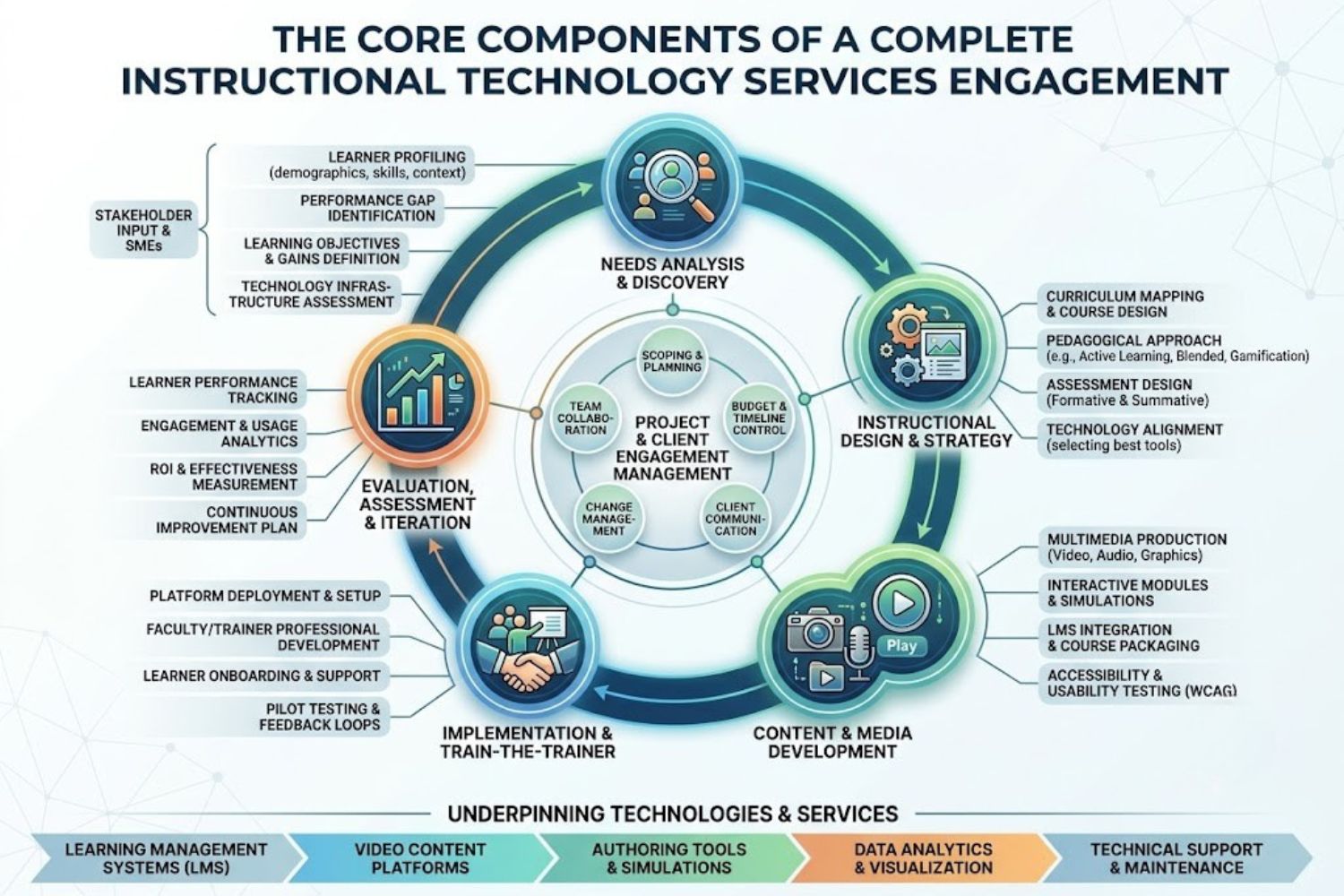
A comprehensive instructional technology services engagement typically covers:
- LMS selection, configuration, and migration
- Curriculum and course design support
- Faculty, teacher, or staff training
- Accessibility and compliance auditing
- Learning analytics and outcomes reporting
- Ongoing technical support and help desk services
- Change management and adoption strategy
Each of these deserves a closer look, because this is where most competing content stops short.
LMS Selection, Setup, and Migration
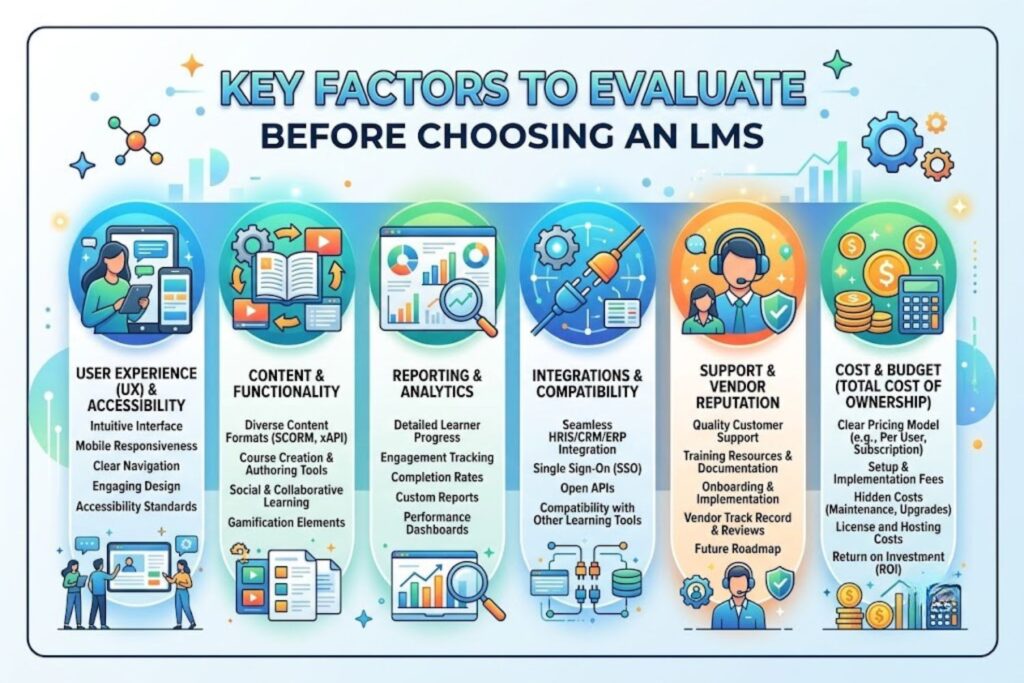
Choosing between platforms like Canvas, Schoology, Moodle, Blackboard, or Google Classroom isn’t just a features comparison — it’s a fit exercise. A provider should evaluate your existing systems (student information system, HR platform, single sign-on setup), your budget model, and your staff’s technical comfort level before recommending anything.
Migration work — moving courses, gradebooks, and content from an old system to a new one — is often underestimated. Poorly planned migrations are one of the most common reasons staff resist a new platform: they lose trust the moment their old materials don’t transfer cleanly.
Expert tip: Ask any provider how they handle data migration testing before a full cutover. If they don’t have a clear answer, that’s a warning sign.
Curriculum and Course Design Support
This includes converting in-person curriculum into blended or fully online formats, building assessment strategies that work in a digital environment, and structuring content so it’s usable on mobile devices, not just desktops.
Faculty and Staff Training
Training is the single most under-invested part of instructional technology adoption. Organizations frequently spend heavily on software and almost nothing on the people who have to use it daily. Effective training programs are ongoing, role-specific, and include follow-up coaching — not a single onboarding session that’s forgotten within a month.
Accessibility and Compliance (ADA, WCAG, Section 508)
Any organization delivering digital instruction — public or private — needs to consider accessibility standards. In the U.S., this generally means alignment with the Web Content Accessibility Guidelines (WCAG) and, for public institutions, Section 508 of the Rehabilitation Act. Accessibility isn’t a one-time checklist; it needs to be built into course design, video captioning, document formatting, and platform configuration from the start.
Data, Analytics, and Learning Outcomes Reporting
Modern LMS platforms generate enormous amounts of usage data — but data without interpretation isn’t useful. Strong instructional technology services include dashboards and reporting that connect platform activity to actual learning outcomes, not just login counts.
Ongoing Technical Support and Help Desk
Implementation is a moment. Support is ongoing. The best providers offer tiered support — self-service documentation, a help desk for routine issues, and escalation paths for complex problems — rather than disappearing after the contract’s initial phase ends.
Who Actually Needs Instructional Technology Services
| Sector | Common Needs | Typical Priorities |
|---|---|---|
| K-12 Schools/Districts | LMS management, device rollout support, teacher PD, compliance | Budget efficiency, ease of use for teachers, student data privacy |
| Higher Education | Online/hybrid course design, faculty training, accreditation support | Academic rigor, faculty buy-in, scalability across departments |
| Corporate Learning & Development | Onboarding platforms, compliance training, skills tracking | ROI measurement, speed of deployment, integration with HR systems |
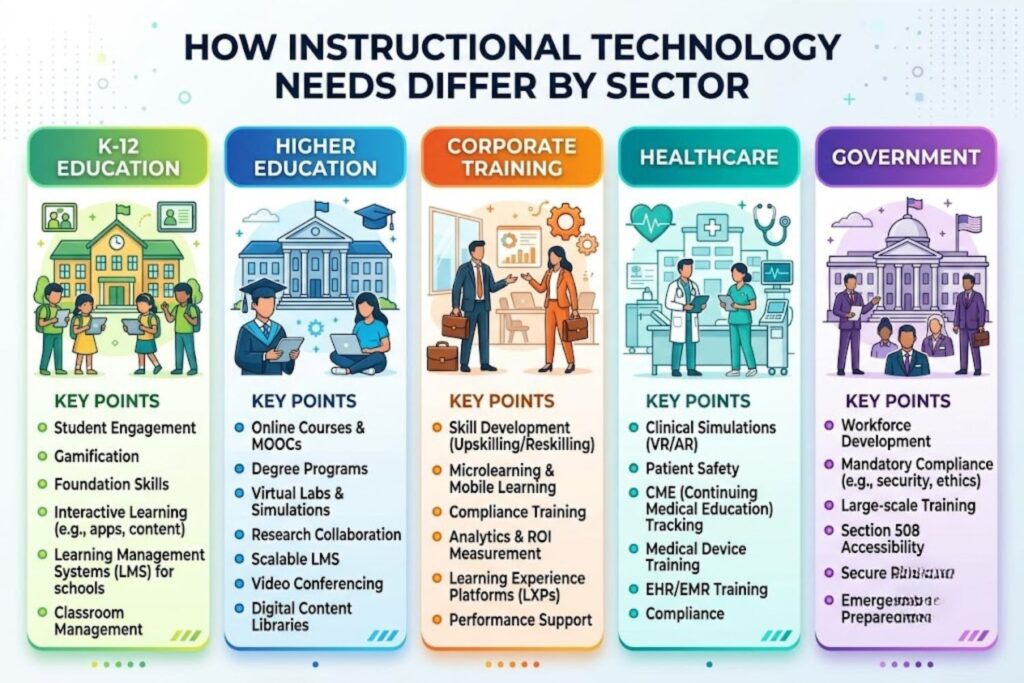
Each of these groups asks the same core question — “how do we make this technology actually work for our people?” — but the constraints differ. Schools operate under tighter budgets and compliance rules (like FERPA for student data). Corporate teams care more about measurable performance outcomes. Higher ed sits somewhere in between, balancing academic freedom with institutional standards.
In-House Team vs. Outsourced Instructional Technology Services
| Factor | In-House Team | Outsourced Provider |
|---|---|---|
| Upfront cost | Higher (salaries, benefits) | Lower initial investment |
| Speed to implement | Slower (hiring, onboarding) | Faster (existing expertise) |
| Institutional knowledge | Strong over time | Requires knowledge transfer |
| Flexibility/scalability | Limited by headcount | Scales with contract terms |
| Long-term cost | Fixed, predictable | Variable, contract-dependent |
| Best for | Large institutions with steady, ongoing needs | Organizations needing project-based or specialized expertise |
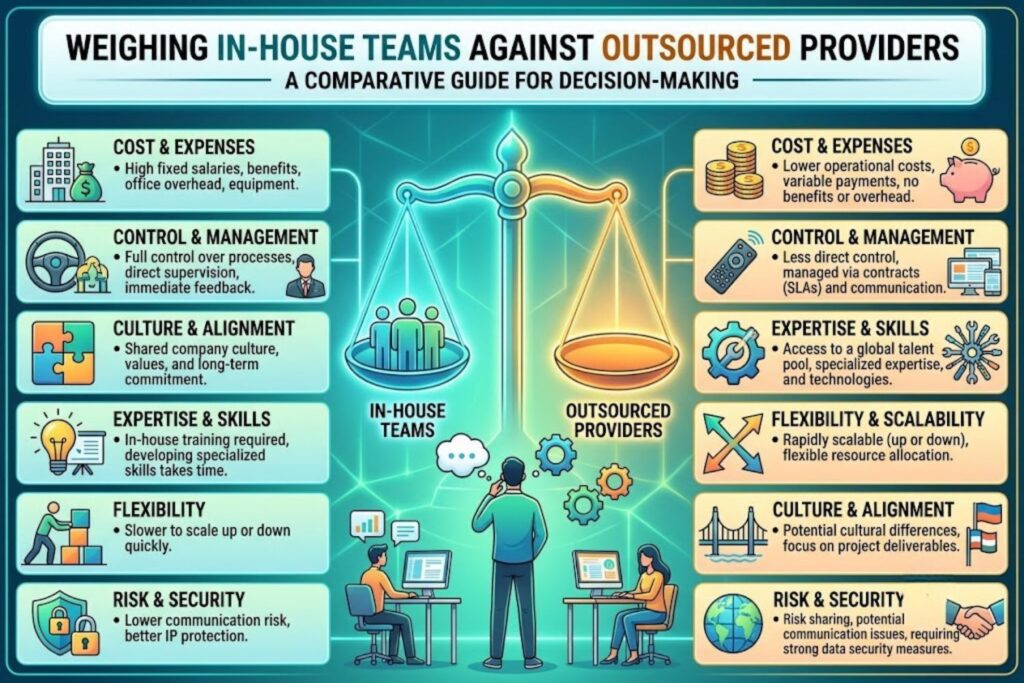
Neither option is universally better. A large university system with continuous instructional design needs may benefit from a hybrid model — a lean in-house team supplemented by outside specialists for major projects like LMS migrations or accessibility audits.
How Much Do Instructional Technology Services Cost
Pricing varies enormously depending on scope, so treat any number you see online with caution. Instead, understand the common pricing models:
- Hourly consulting: Common for smaller, defined projects like an accessibility audit or a training workshop series.
- Project-based flat fee: Common for LMS migrations, course redesigns, or full curriculum digitization.
- Retainer/subscription: Common for ongoing support, help desk services, and continuous training programs.
- Per-user or per-seat licensing (for platform-based services): Common when the service is bundled with software.
The honest answer to “how much does this cost” is: it depends on scope, institution size, and whether you need a one-time project or ongoing partnership. Any provider giving you a firm number before understanding your environment is guessing.
How to Choose an Instructional Technology Services Provider
Use this framework before signing anything:
- Define the problem, not the solution. Don’t start with “we need an LMS.” Start with “our teachers aren’t using our current tools effectively.” The right service follows from the right problem statement.
- Ask for references in your specific sector. A provider strong in corporate L&D may not understand K-12 compliance requirements.
- Check their training methodology. One-time onboarding vs. ongoing coaching makes a measurable difference in adoption.
- Confirm accessibility expertise explicitly. Don’t assume — ask what standards they design to and how they test.
- Clarify data ownership and privacy practices, especially for K-12 work involving FERPA-protected student data.
- Ask what happens after the contract ends. Do you retain full access to documentation, training materials, and configurations?
Red Flags to Watch For
- Vague answers about accessibility compliance
- No clear training or change-management plan
- Pricing that seems disconnected from scope
- No references from institutions similar to yours
- Reluctance to explain how they handle data migration
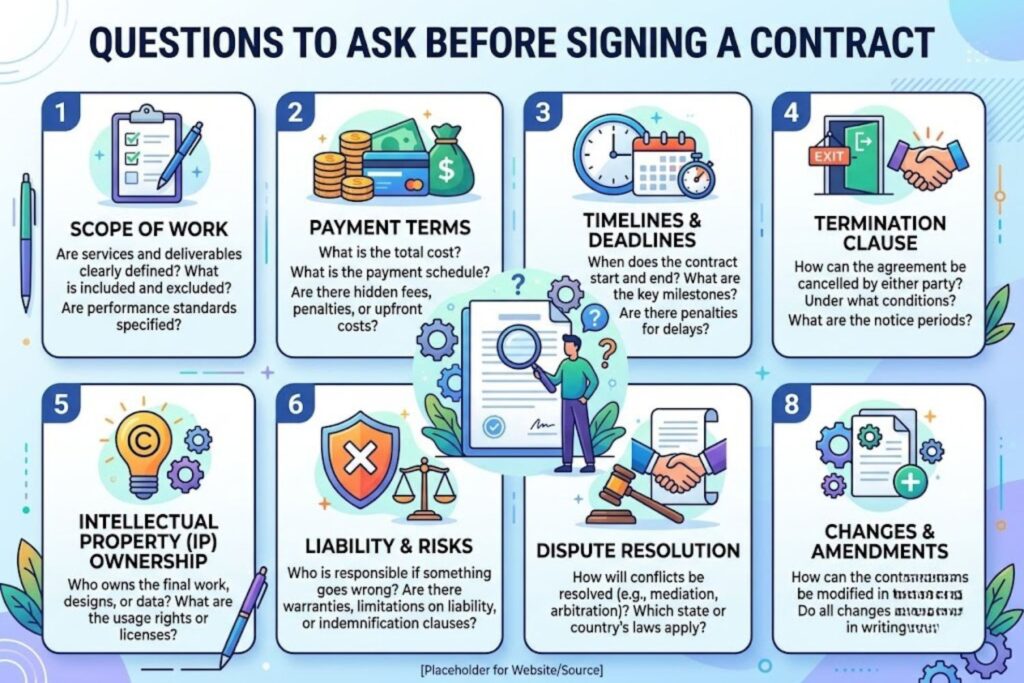
Questions to Ask Before You Sign a Contract
- What does onboarding look like in the first 90 days?
- Who owns the data and configurations after the engagement ends?
- How do you measure success beyond adoption rates?
- What’s your process when something breaks after go-live?
Common Mistakes Organizations Make With Instructional Technology
- Buying the platform before defining the problem. Technology should follow strategy, not the other way around.
- Underfunding training relative to software. A powerful LMS with untrained staff performs worse than a simple tool people actually understand.
- Treating accessibility as an afterthought. Retrofitting accessibility is far more expensive than designing for it from the start.
- Ignoring change management. Staff resistance is rarely about the tool itself — it’s about how the change was communicated and supported.
- No plan for evaluating outcomes. Without a defined measure of success, it’s impossible to know if the investment worked.
Instructional Technology Trends Shaping 2026
Instructional technology continues to shift in a few consistent directions: greater use of adaptive and personalized learning paths, tighter integration between LMS platforms and AI-assisted tutoring tools, growing emphasis on data privacy given increased regulatory attention on student data, and a continued push toward accessibility-by-default design rather than after-the-fact fixes. Organizations that build flexibility into their instructional technology strategy now will adapt more easily as these trends mature.
Key Takeaways
- Instructional technology services combine consulting, implementation, training, and support — not just software.
- The service layer, especially training and change management, usually determines success more than the platform choice itself.
- Costs vary by scope; be skeptical of anyone quoting a firm price before understanding your environment.
- Accessibility should be built into design from day one, not added later.
- The right provider depends on your sector — K-12, higher ed, and corporate L&D each have distinct priorities.
10. FAQ
What is instructional technology?
Instructional technology is the practice of applying digital tools and platforms to teaching and learning in a way that’s guided by instructional design principles, not just tool adoption for its own sake.
What do instructional technology services include?
They typically include LMS selection and setup, curriculum and course design support, staff or faculty training, accessibility compliance, learning analytics, and ongoing technical support.
Who provides instructional technology services?
Independent consulting firms, specialized edtech agencies, LMS vendors offering professional services, and in some cases internal district or university teams.
How is instructional technology different from educational technology?
Educational technology refers broadly to digital tools used in learning. Instructional technology refers specifically to how those tools are applied to achieve instructional goals.
Do small schools or organizations need instructional technology services?
Often yes, especially for training and accessibility compliance, even if the scope is smaller than what a large district or university would need.
How much do instructional technology services cost?
It depends on scope and delivery model — hourly consulting, flat project fees, or ongoing retainers are all common. There’s no universal number that applies across institutions.
What’s the difference between instructional design and instructional technology?
Instructional design focuses on the structure and sequencing of learning content. Instructional technology focuses on how digital tools support that design and delivery.
Is LMS implementation part of instructional technology services?
Yes, LMS selection, configuration, and migration are core components of most instructional technology engagements.
How long does an LMS migration typically take?
Timelines vary widely based on institution size and data complexity, but thorough migrations include testing phases before full cutover to avoid data loss or disruption.
What accessibility standards apply to instructional technology in the U.S.?
The Web Content Accessibility Guidelines (WCAG) are the most widely referenced standard, and public institutions must also consider Section 508 of the Rehabilitation Act.
Can instructional technology services help with teacher or faculty resistance to new tools?
Yes — this is typically addressed through change management strategy and ongoing, role-specific training rather than a single onboarding session.
Should instructional technology be handled in-house or outsourced?
It depends on the organization’s size, budget, and whether needs are ongoing or project-based. Many institutions use a hybrid approach.
What’s the biggest mistake organizations make with instructional technology?
Investing heavily in software while underfunding training and change management, which often leads to low adoption regardless of how capable the platform is.