The tech news cycle has never moved faster. Every single day brings announcements of new AI breakthroughs, startup funding rounds, security vulnerabilities, regulatory changes, and product launches that promise to reshape industries. For professionals, investors, and tech enthusiasts, staying informed isn’t optional—it’s essential.
Yet here’s the problem: most people don’t actually read tech news strategically. They scroll headlines passively, get distracted by clickbait, or end up confused by breathless press releases disguised as journalism. This guide changes that.
Over the next 1500 words, you’ll learn exactly how to navigate the modern tech news landscape. You’ll discover where quality coverage actually lives, how to spot credibility red flags, and most importantly, how to build a personal tech news strategy that doesn’t consume your life.
What Counts as Tech News? (Definition & Categories)
Tech news isn’t monolithic. Understanding the different categories helps you know what to prioritize and where to find it.
Product Announcements & Launches form the foundation of tech news. Apple releases a new iPhone. Google announces a feature. Microsoft unveils enterprise software. These stories matter because they often signal market direction and competitive positioning. Product news also tends to be the most accessible—companies spend marketing budgets ensuring coverage reaches the widest audience.
Breaking News & Security operates on a different timeline. A major data breach. A critical vulnerability discovered. A company’s emergency pivot in response to crisis. Security news is inherently time-sensitive and demands immediate attention, especially in industries like finance and healthcare where incidents carry real consequences.
Corporate Mergers, Acquisitions & Funding tell the story of industry consolidation and capital flow. A $500 million Series B funding round signals investor confidence in a company’s trajectory. A surprise acquisition might indicate a tech company’s next strategic direction. This category matters enormously for investors and business professionals, though mainstream audiences often overlook it.
AI & Emerging Technologies have dominated coverage since late 2022, creating a new category entirely. This includes language models, robotics, biotech applications, and quantum computing—essentially, technologies that haven’t yet hit mainstream consumer use but will likely reshape industries within 5-10 years.
Regulatory & Policy Changes often fly under the radar despite massive implications. The EU’s AI Act restrictions. California’s privacy legislation. Antitrust investigations into major tech platforms. These stories matter profoundly but require reading between the lines to understand real-world business impact.
Cybersecurity & Privacy form an increasingly critical category. Ransomware attacks on hospitals. Data breaches exposing millions. New surveillance capabilities or privacy-protecting legislation. These stories have immediate consequences for both individuals and organizations.
Why Tech News Matters More Than Ever
You might think tech news only matters to people working in tech. That’s never been less accurate.
Business Impact touches every industry now. A manufacturing company needs to understand AI’s impact on workforce planning. A healthcare provider must track cybersecurity threats. A financial services firm cannot ignore blockchain developments or regulatory pivots. Tech is no longer a separate industry—it’s the infrastructure that everything else runs on.
Consumer Implications go beyond gadget reviews. When a major social media platform changes its algorithm, how news reaches millions shifts instantly. When a new security vulnerability emerges, your personal data might be exposed. When a company faces regulatory action, services you rely on could disappear or change completely.
Society & Culture reshape around tech developments. Deepfakes create new concerns about misinformation. AI employment effects spark policy debates. Social media dynamics shift political discourse. Understanding tech news means understanding forces actively shaping how society functions.
Investment Opportunities exist for those who understand tech trends before they become obvious. The investors who read about prompt engineering advances before mainstream media coverage began had months of edge. Those who tracked regulatory discussions around cryptocurrency understood which projects faced existential risk.
The Tech News Landscape: Where to Find Quality Coverage
Not all tech news sources offer equal value.
Tier 1 Generalist Tech Sites like TechCrunch, The Verge, and Wired offer breadth but vary in depth. TechCrunch excels at startup news and funding coverage, supported by strong venture capital connections. The Verge combines gadget reviews with cultural analysis, making complex tech accessible. Wired goes deepest on long-form investigative pieces but publishes less frequently.
These platforms work as daily-check destinations—they’re reliable but sometimes surface-level.
Specialized Coverage exists for deeper dives. AI-focused publications like Import AI or Gradient offer technical depth mainstream media cannot. Cybersecurity specialists like Bleeping Computer and Dark Reading track threats other outlets miss. Fintech publications like The Block cover cryptocurrency and blockchain developments comprehensively.
The best strategy uses generalist sources for awareness and specialized sources for depth within your field.
Niche & Regional Sources matter far more than most realize. India tech coverage differs from U.S. tech news. European tech regulations shape different market dynamics. Asian startup ecosystems operate differently. If you’re watching global opportunities or international implications, regional sources become essential.
Industry-Specific Channels exist for enterprise tech, healthcare tech, automotive tech, and dozens of other verticals. Someone in healthcare needs different tech news than someone in finance. These specialized sources offer context that generalist publications simply cannot provide.
How to Evaluate Tech News Sources: A Critical Framework
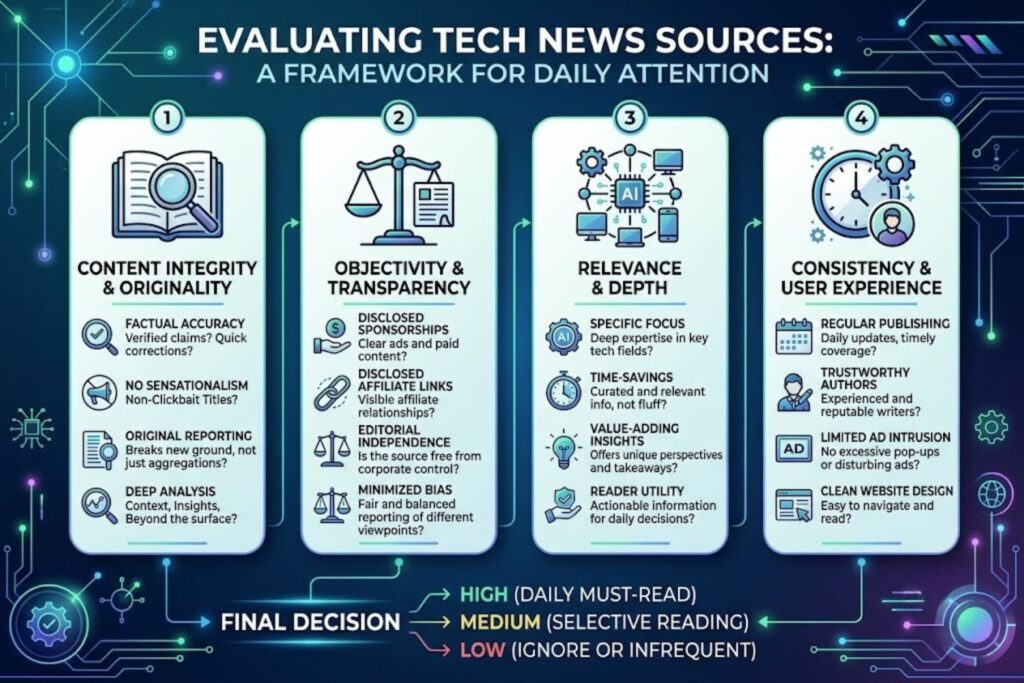
Reading widely doesn’t matter if you cannot distinguish excellent reporting from promotional fluff dressed as journalism.
Editorial Independence & Ownership matters significantly. Who owns this publication? Does it take advertising from tech companies? Does it cover those advertisers critically? A publication owned by a private equity firm makes different editorial decisions than an independent operation. Knowing ownership helps you recognize potential biases.
Credibility Signals include bylines from experienced journalists, attribution of all claims, correction notices when errors occur, and explanations of methodology. Good publications cite sources you can verify. They explain why they’re covering something and provide context competitors lack. They correct errors visibly rather than silently.
Bias & Narrative Patterns become apparent over time. Does a publication consistently favorable to Apple? Skeptical of cryptocurrency regardless of actual developments? Does it emphasize certain story types while ignoring others? No publication is unbiased, but recognizing patterns helps you account for them.
Update Frequency & Accuracy Corrections reveal publication standards. How quickly do they update articles with new information? When they report something incorrect, do they explicitly note the correction? Publications that update silently or never correct errors lack accountability.
Primary vs. Secondary Sources matters for credibility. Is the journalist reporting directly from the company, researcher, or security expert? Or are they summarizing someone else’s reporting? Primary source reporting takes more effort but carries more weight. Secondary sourcing might be fine for features but should never constitute breaking news.
Common Mistakes People Make Reading Tech News
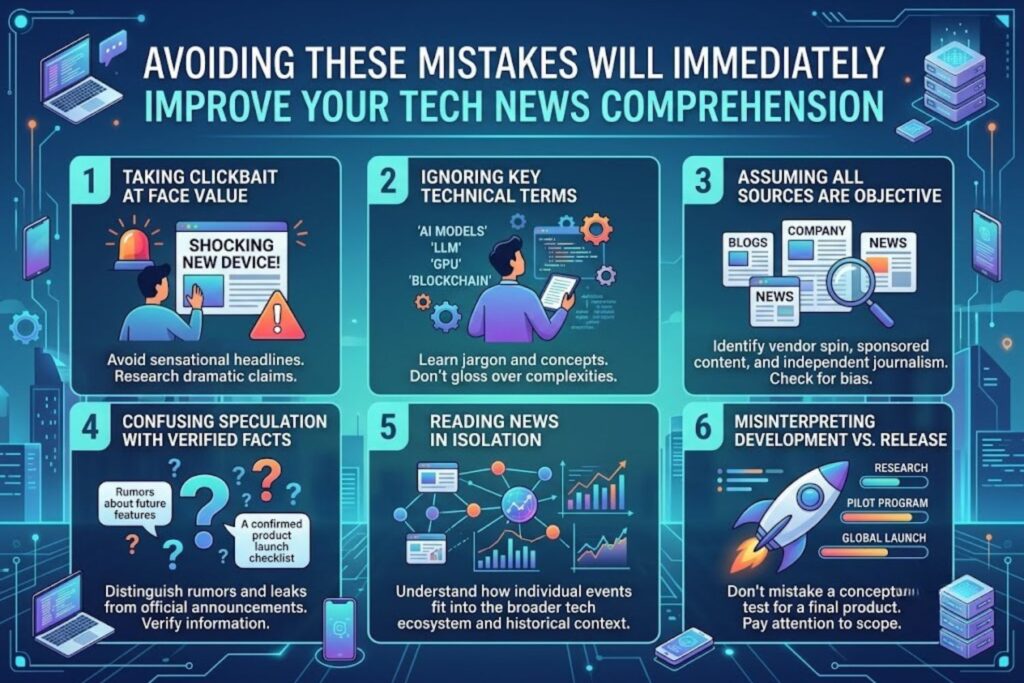
Mistaking Announcement for Reality is the most common error. A company announces a breakthrough. Journalists report the announcement. Readers assume it’s real. In reality, many announcements describe capabilities that work in labs but not at scale, in restricted conditions rather than real-world scenarios, or sometimes not at all.
The solution: look for independent verification. Has anyone outside the company replicated the results? Are critics raising legitimate concerns the announcement addresses?
Ignoring Context & Historical Precedent leads to panic or euphoria without reason. A company announces a new business model. This year. The same company announced a different business model that failed completely three years ago. This context changes everything.
Over-Weighting Short-Term Volatility causes poor decision-making. A stock drops 5% because of negative tech news. This doesn’t mean the underlying business fundamentals changed. Similarly, positive news shouldn’t automatically make you bullish. Market reaction often proves temporary.
Confirmation Bias in Source Selection means seeking publications that reinforce existing beliefs rather than challenging them. If you’re bullish on cryptocurrency, you’ll naturally gravitate toward crypto-friendly publications. If you’re skeptical, you’ll read sources emphasizing risks. Neither approach builds accurate understanding.
Emerging Categories Reshaping Tech News Coverage
Several categories now dominate coverage in ways they didn’t five years ago.
AI & Machine Learning went from academic interest to mainstream concern in 18 months. Coverage ranges from technical breakthroughs to regulatory responses to job market implications. Anyone in almost any industry needs baseline understanding here.
Deepfakes & Misinformation represent new challenges to tech journalism itself. How do you report on manipulated media? How do you distinguish legitimate concerns from conspiracy theories? Coverage has evolved as the problem has intensified.
Climate Tech & Sustainability have become mainstream tech coverage areas. Electric vehicle companies, renewable energy startups, carbon capture technology, and sustainable materials innovation now receive serious coverage previously reserved for enterprise software.
Cybersecurity Threats make headlines constantly now. Ransomware attacks on hospitals. Nation-state hacking operations. Zero-day exploits. The cybersecurity category shifted from technical trade publications to mainstream coverage because attacks increasingly affect ordinary people.
Privacy & Regulation form an increasingly critical category as governments worldwide regulate tech companies. GDPR, AI Act, data privacy laws, and antitrust investigations reshape the industry and deserve serious coverage.
Building Your Personal Tech News Strategy
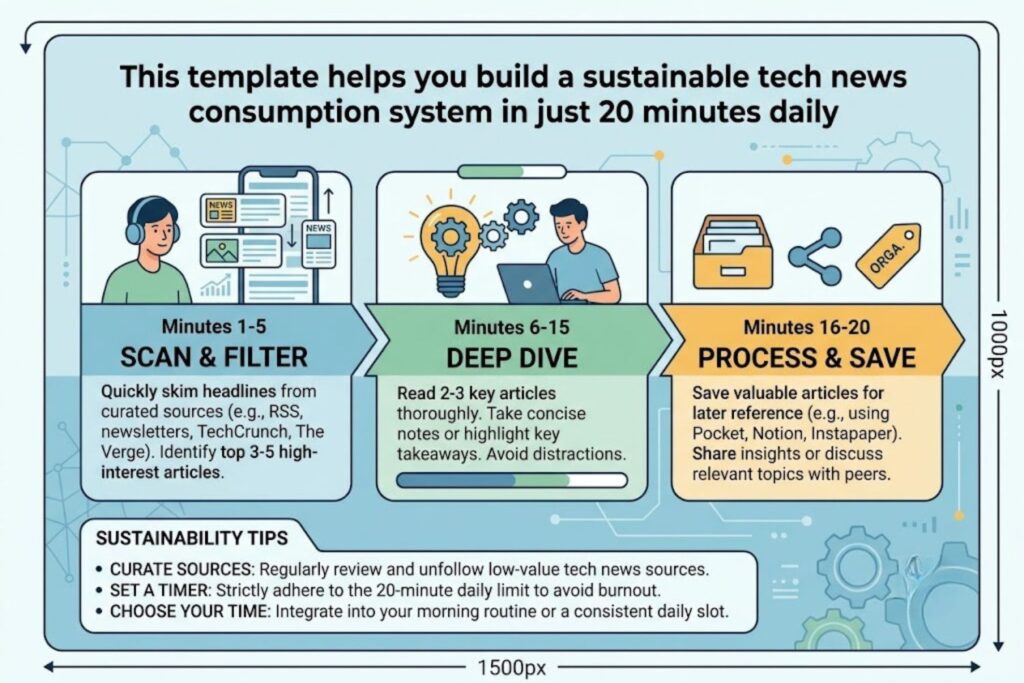
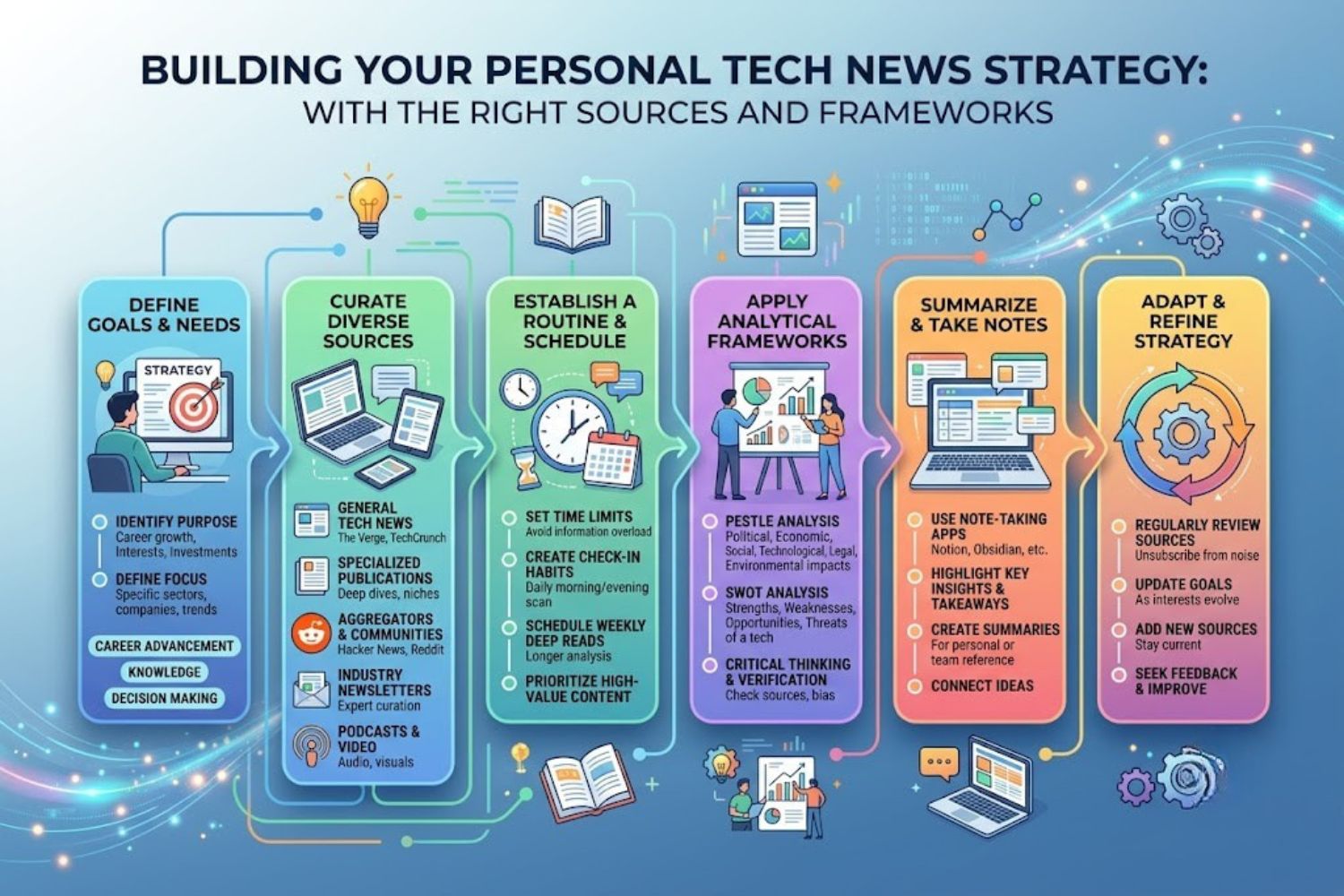
Here’s what actually works:
Define Your Information Goals. Why are you reading tech news? To stay generally informed? To track specific industries? To make investment decisions? To protect your business? Your goals determine which sources matter and how deeply you need to follow stories.
Curate Your Sources using this template:
- One generalist daily check-in (The Verge, TechCrunch, or Wired)
- One specialized source in your primary area of focus
- One alternative perspective source (something challenging your default views)
- One industry or regional source matching your specific needs
- Optional: one deep-dive newsletter in your area of expertise
Set Up an Efficient Workflow. Don’t check news randomly. Set specific times to scan headlines. Use RSS readers or newsletters to deliver news to you rather than chasing it. Dedicated focus periods beat constant context-switching.
Tools for Tech News Aggregation range from simple (Google News, Apple News) to sophisticated (Feedly with RSS feeds, custom news dashboards). Find what matches your preference for depth versus speed.
Time Management matters more than coverage breadth. Reading 20 sources superficially teaches you less than reading 5 sources deeply. Allocate time accordingly. For most professionals, 15-20 minutes daily suffices for general awareness; specialized knowledge demands more focused reading.
Red Flags in Tech News Reporting

Sensational Headlines vs. Substance reveal low-quality journalism. “This Technology Will DESTROY Everything” rarely stands scrutiny. Better headlines explain what actually happened without manufactured drama.
Lack of Expert Perspectives suggests the journalist didn’t do their homework. Quality coverage includes reactions from independent experts, critics, and people affected by the story. One-sided coverage lacks credibility.
Missing Attribution & Sources means you cannot verify claims. Good reporting cites sources throughout. If someone is making an assertion, you should know who and potentially how to reach them.
Promotional Content Disguised as News appears throughout tech media. The company pays for an article that reads like editorial coverage. Native advertising, sponsored content, and press releases packaged as news all belong in this category. Good publications clearly label them.
The Business of Tech Journalism: What Drives Coverage
Understanding journalism’s economics helps you read more critically.
Ad Revenue & Sponsored Content fund most tech publications. This creates inherent conflicts. A publication relying on ads from Apple faces pressure avoiding negative Apple coverage. Sponsored content from major companies blurs editorial lines.
Embargoed Press Releases shape coverage timing. A company sends stories to journalists under embargo, allowing preparation for simultaneous publication. The embargo shapes which publications get access and thus which stories land first.
Influencer Relationships matter too. Journalists develop relationships with company executives, researchers, and founders. These relationships generate exclusive stories but can create unconscious bias toward sources with whom reporters have positive relationships.
Traffic-Driven Headlines incentivize clickbait. Publications measure success partly by page views. More dramatic headlines drive clicks. This creates pressure toward sensationalism even for outlets with editorial integrity.
How to Read Between the Lines: Interpreting Tech Announcements
Understanding Press Release Language requires pattern recognition. When a company says “exploring strategic options,” that often means potential sale or massive restructuring. “Realigning resources” usually means layoffs. Learning euphemisms reveals what companies actually mean.
Spotting Competitive Moves means reading announcements as moves in larger games. Company X announces a new service that directly competes with Company Y’s core business. That’s not random—it signals strategic intent.
Recognizing Financial Implications takes practice. A company loses a major client. That’s not just news—it’s a financial warning. Does the company disclose client concentration risks? Now you know to watch earnings calls carefully.
Identifying Market Trends emerges from seeing patterns across multiple companies. Three different startups announce in the same category within a month. That indicates investor interest and likely competition coming. A dozen companies all emphasize sustainability messaging? Market perception has shifted.
FAQ Section
Q1: Which tech news sources should I read daily?
Start with one of the Big Three (TechCrunch, The Verge, or Wired) based on your preference, then add one specialized source in your area of focus. Most professionals don’t need more than two daily sources for general awareness.
Q2: How can I tell if a tech news story is credible?
Check for attribution to named sources, look for independent verification, consider whether the journalist spoke to critics and supporters equally, and verify the publication’s track record on corrections. Stories citing only press releases or single sources warrant skepticism.
Q3: Is technology journalism inherently biased?
All journalism involves choices about what to cover and how. Tech journalism specifically faces pressures from advertising revenue, access-based relationships, and cultural biases toward disruption. Recognizing these pressures helps you read more critically without assuming outright dishonesty.
Q4: How much time should I spend reading tech news?
For general awareness, 15-20 minutes daily suffices. For professionals whose careers depend on tech knowledge, 45-60 minutes daily of focused reading in relevant areas makes sense. More than that generally produces diminishing returns.
Q5: Should I pay for tech news subscriptions?
Some specialized sources (The Information, Stratechery) offer valuable depth available nowhere else. Most free sources suffice for general awareness, but deep expertise in specific areas often justifies subscription costs.
Q6: How do I know if an emerging tech story matters long-term or is hype?
Look for adoption beyond early adopters, evidence of solving real problems, and emerging regulatory frameworks. Technologies that only work in controlled conditions or primarily generate excitement haven’t proven staying power yet.
Q7: Why do I see different versions of the same story across publications?
Different outlets have different sources, access levels, editorial focuses, and audience assumptions. One version emphasizes investor implications while another emphasizes consumer impact. Both can be true simultaneously.
Q8: How can I avoid confirmation bias in tech news reading?
Deliberately read one publication challenging your default views. If you’re bullish on crypto, read skeptical coverage. If you’re skeptical of AI hype, read optimistic coverage. Understanding opposing perspectives makes your own views more sophisticated.
Q9: What separates tech news from tech journalism?
Tech news reports events as they happen. Tech journalism investigates significance, explains implications, and often takes months of reporting. Both matter but serve different purposes.
Q10: How do I filter out promotional content in tech news?
Look for “sponsored,” “native advertising,” or “partner content” labels. Check whether the story includes critical perspectives. Notice if all quotes come from the company being featured. Promotional content rarely includes criticism.