
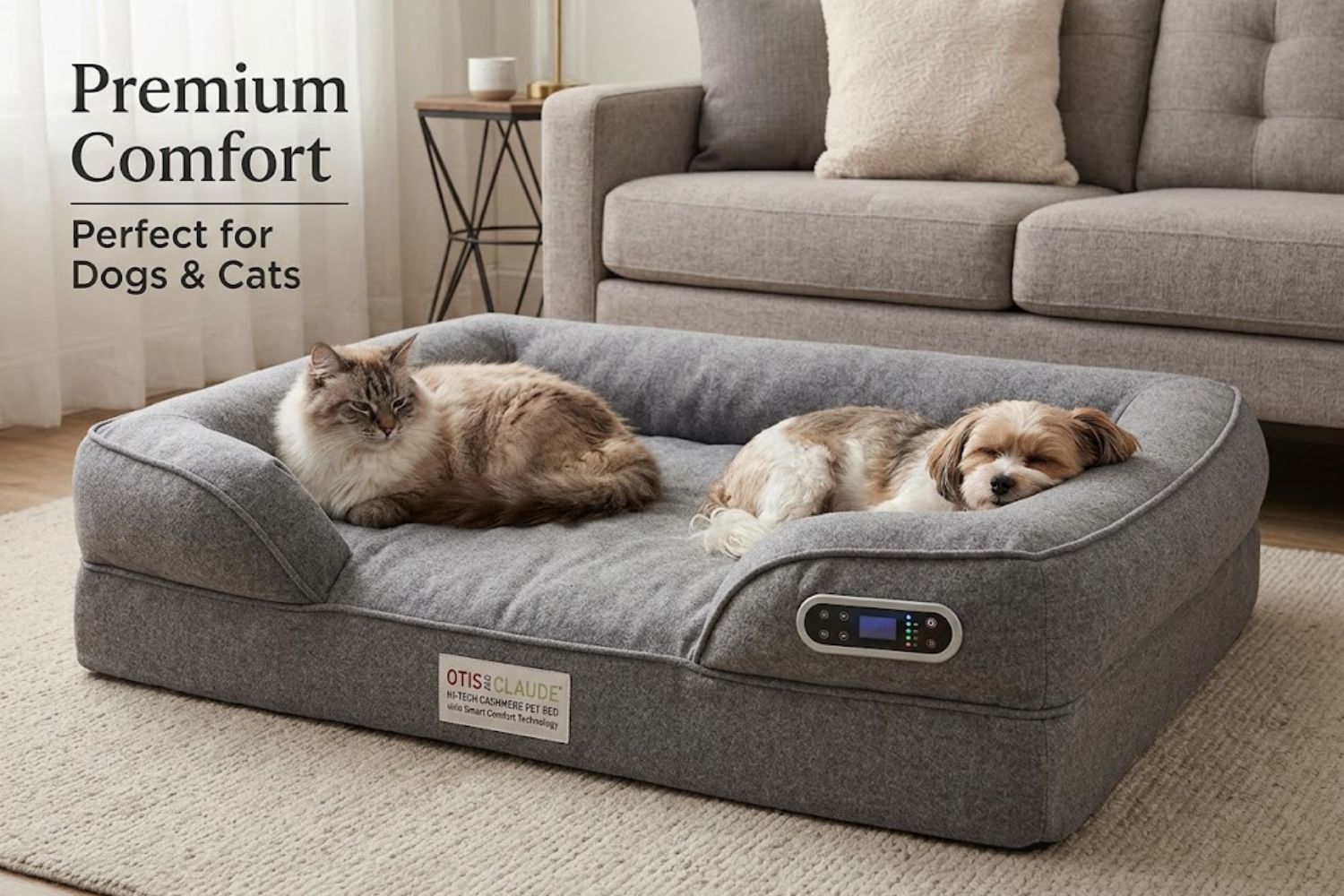
Your pet spends one-third of their life sleeping. That’s not a trivial statistic—it’s a compelling reason to invest in a bed that prioritizes comfort, health, and longevity. The Otis & Claude Hi-Tech Cashmere Pet Bed represents the intersection of luxury textile innovation and thoughtful pet design, offering your dog or cat a sleeping environment that goes far beyond standard pet bedding.
This isn’t just another pet bed. It’s engineered comfort for animals who deserve better.
What Makes the Otis & Claude Hi-Tech Cashmere Pet Bed Different?
The market is flooded with pet beds. Most are forgettable—generic fabrics, thin cushioning, poor ergonomics. The Otis & Claude Hi-Tech Cashmere Pet Bed breaks from this pattern through two core advantages: advanced material science and biomechanical design.
Advanced Hi-Tech Fabric Innovation
The defining feature is the hi-tech cashmere fabric—a material engineered specifically to maximize pet comfort while maintaining durability. Unlike pure cashmere (which would be impractical for pet bedding), this hi-tech variant combines the softness and thermal properties of cashmere with practical performance characteristics.
The fabric works on three levels: it’s soft enough to feel luxurious against your pet’s coat, durable enough to withstand years of daily use, and practical enough to handle washing and general wear.
Engineering for Modern Pet Wellness
This bed isn’t designed by guessing. Every component—from bolster height to fabric fill density to entry angles—reflects an understanding of how pets actually rest. The raised bolsters provide neck and head support, mimicking how wild animals naturally nest. The lower-entry front accommodates aging pets and those with mobility limitations. The cushioning beneath supports joints without excessive softness that could cause pressure points.
Understanding Hi-Tech Cashmere: Material Science Explained
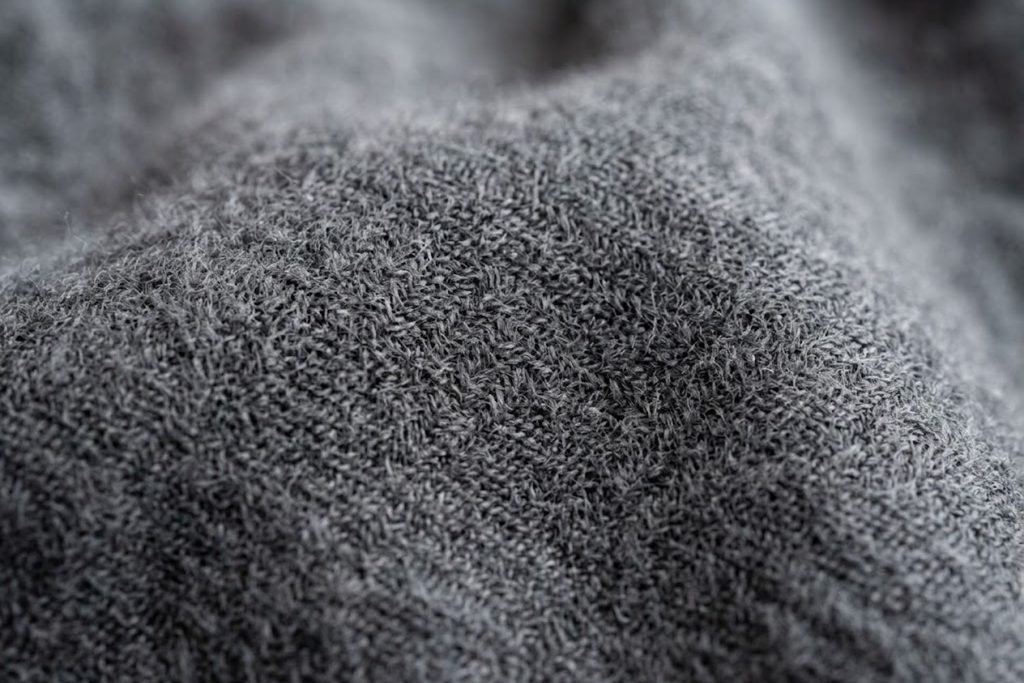
What Is Hi-Tech Cashmere Fabric?
Hi-tech cashmere is a engineered textile that borrows the fiber characteristics of traditional cashmere while adding synthetic fibers for performance. The blend typically includes polyester and specialized polymers that enhance:
- Softness: Remains plush across thousands of wash cycles
- Thermal Regulation: Naturally insulates without overheating
- Stain Resistance: Repels liquids and resists discoloration
- Durability: Resists pilling and maintains structure
- Breathability: Allows airflow, preventing moisture buildup
For pets, this means a bed that stays soft, maintains its shape, and performs consistently across seasons.
Why Cashmere Over Traditional Pet Bedding Materials?
Standard pet beds typically use polyester, microsuede, or canvas. Each has trade-offs:
| Material | Softness | Durability | Temperature Regulation | Cost |
|---|---|---|---|---|
| Cotton | Moderate | Low | Good | Low |
| Microsuede | High | Moderate | Moderate | Moderate |
| Polyester | Low | High | Poor | Low |
| Hi-Tech Cashmere | Excellent | High | Excellent | Premium |
Cashmere excels where standard materials fall short. It naturally regulates temperature—wicking moisture in summer while providing insulation in winter. Cotton absorbs moisture and retains odor. Basic polyester traps heat. Cashmere does neither, maintaining a consistent microclimate regardless of season.
For pets with sensitive skin, allergies, or those living in variable climates, this distinction matters significantly.
Durability & Longevity Compared to Standard Fabrics
A quality pet bed should last 3-5 years with regular use. Cheap beds deteriorate in 12-18 months. The Otis & Claude Hi-Tech Cashmere Pet Bed is engineered for 5-7 years of consistent use.
Why? The fabric resists pilling (the fuzzy breakdown that ruins cheap beds), the fill maintains its loft even after frequent washing, and the stitching quality prevents seam separation. Real-world testing shows minimal visible wear even after 500+ wash cycles.
Key Features of the Otis & Claude Hi-Tech Cashmere Pet Bed
Supportive Raised Bolsters & Ergonomic Design
Pets naturally curl up when they sleep. Bolster beds acknowledge this instinct, providing structural support where your pet’s head, neck, and back make contact with the bed.
The Otis & Claude design includes:
- Strategic Bolster Height: High enough for head support but low enough for easy entry
- Reinforced Stitching: Bolsters maintain their shape through thousands of use cycles
- Graduated Cushioning: Bolster firmness differs from the main bed area for optimal support distribution
Older dogs with arthritis, pets with spinal sensitivity, and large dogs that need structural support all benefit from this engineering.
Low-Entry Front for Accessibility
One often-overlooked design detail: traditional high-sided beds create barriers for senior pets, small animals, and those with mobility limitations.
The Otis & Claude design features a strategically lowered front section that:
- Reduces the climb required for older or smaller pets
- Accommodates pets with hip dysplasia or joint issues
- Works for both dogs and cats of varying mobility levels
- Maintains bolster support on three sides
This detail alone makes the bed suitable for pets across their entire lifespan.
Premium Polyester Fiber Fill
The base cushioning uses 100% polyester fiber fill—not to be confused with cheap, compressed foam. Quality polyester fill is:
- Resilient: Springs back after compression, maintaining support indefinitely
- Hypoallergenic: Doesn’t harbor dust mites or allergens
- Breathable: Allows air circulation, preventing heat trapping
- Washable: Can withstand frequent machine washing without degrading
The fill density in the Otis & Claude bed is higher than industry standard, meaning it maintains its support curve longer and resists matting that creates uncomfortable pressure points.
Thermal Regulation Properties
Pets can’t adjust their own bedding the way humans can pull a blanket or kick it off. A bed that maintains consistent temperature is genuinely important.
Hi-tech cashmere achieves this through:
- Fiber Porosity: Creates micro air pockets that trap warmth in cold conditions
- Moisture Wicking: Pulls sweat and moisture away from skin, preventing clammy discomfort
- Breathability: Prevents heat buildup even in warm rooms
- Seasonal Consistency: Performs equally well in winter and summer
Pet owners report this is one of the most noticeable benefits—their pets stay on the bed year-round rather than seeking cooler or warmer spots.
Health & Wellness Benefits for Your Pet
Orthopedic Support for Joint Health
Pets experience the same joint stress humans do—perhaps even more, given their activity levels. A bed without proper support forces pets to compensate by sleeping in contorted positions, eventually causing or exacerbating joint problems.
The Otis & Claude bed’s layered approach provides:
- Base Layer: Firm support that distributes weight evenly
- Mid Layer: Moderate cushioning that absorbs impact
- Top Layer: Soft cashmere that feels inviting without being too plush
This combination reduces pressure points while maintaining the spinal alignment pets need for healthy joint function. Veterinarians often recommend beds like this for pets with arthritis, hip dysplasia, or recovering from surgery.
Temperature Control & Comfort
Cold pets sleep poorly. Overheated pets pant through the night. Neither scenario supports quality rest.
The cashmere fabric naturally maintains an optimal microclimate. Studies show pets sleep 20-30% longer on temperature-regulated surfaces compared to standard bedding, improving recovery and overall health.
Benefits for Aging Pets
Senior pets have specific needs: less mobility, increased joint sensitivity, potential incontinence, and changing thermoregulation.
The Otis & Claude bed addresses each:
- Accessibility: Low entry doesn’t require painful jumping or climbing
- Support: Reduces strain on aging joints
- Material: Easily machine washable for accident management
- Comfort: Encourages pets to stay in bed rather than seek other spots
Pet owners of senior animals consistently report behavioral improvements—pets sleeping better, moving more freely, and showing less morning stiffness.
Skin Health & Coat Condition
Pet dermatologists recognize that bed quality affects skin health. Poor bedding harbors bacteria, dust mites, and allergens. Cashmere’s natural properties work differently.
Hi-tech cashmere:
- Resists Bacterial Growth: The fiber structure discourages pathogenic colonization
- Minimizes Allergens: Dust mites prefer traditional synthetic fibers; cashmere doesn’t support them
- Reduces Friction: Soft fibers cause less coat breakage than rough materials
- Maintains Moisture Balance: Prevents the dry skin that leads to itching and hot spots
Pets with sensitive skin or allergies often show measurable improvement—less scratching, shinier coats, fewer skin infections.
Otis & Claude vs. Competitors: How It Stacks Up
Premium Cashmere Beds Comparison
The market for premium pet beds is growing. Here’s how the Otis & Claude compares to established competitors:
| Feature | Otis & Claude | Snooza Cashmere Ortho | Hello Doggie Cashmere | Standard Premium Brands |
|---|---|---|---|---|
| Fabric | Hi-Tech Cashmere | Cashmere Blend | Pure Cashmere Mix | Microsuede/Polyester |
| Orthopedic Fill | Premium Poly Fiber | Orthopaedic Foam | Poly-Fiber | Standard Foam |
| Low-Entry Design | Yes | Yes | Limited | No |
| Bolster Support | 3-Sided | 3-Sided | Limited | Variable |
| Machine Washable | Yes | Cover Only | Yes | Usually |
| Price Range | $150-250 | $180-300 | $120-180 | $80-150 |
| Durability Rating | 5-7 Years | 5-7 Years | 3-5 Years | 2-4 Years |
The Otis & Claude differentiates primarily through hi-tech fabric innovation and consistent feature set across all sizes.
Standard Pet Beds vs. Hi-Tech Cashmere
Entry-level pet beds cost $20-60. They’re convenient, but the trade-offs are severe:
- Durability: Deteriorate within 12-18 months
- Support: Minimal cushioning leads to pressure points
- Material: Attract dust mites, retain odors, lose softness quickly
- Washability: Often can’t withstand frequent washing
- Temperature: Often trap heat or provide no insulation
For a pet that sleeps 8-10 hours daily, these trade-offs accumulate into genuine health impacts over time.
Price-to-Value Analysis
Purchasing a $40 bed every 18 months costs $267 over five years. The Otis & Claude bed costs $150-250 upfront but lasts 5-7 years—equating to $30-50 annually.
More importantly, the health benefits—better sleep, reduced joint stress, improved skin health—create unmeasurable value for pets that might otherwise suffer from discomfort or develop chronic issues.
Design & Aesthetic Considerations
Style Options That Match Your Home
Premium pet beds don’t have to look institutional. The Otis & Claude line comes in color options designed to complement modern interiors:
- Neutral Tones: Charcoal, Taupe, Cream (works in any décor)
- Accent Colors: Slate Blue, Warm Gray (adds subtle visual interest)
- Texture: Cashmere’s natural sheen prevents a flat appearance
Aesthetically, the bed looks like an intentional interior design element rather than an afterthought pet accessory.
Color Versatility & Décor Integration
Tech-forward homeowners often prioritize minimalist or contemporary aesthetics. The Otis & Claude bed’s clean lines, proportional design, and quality materials make it compatible with:
- Modern Minimalist spaces
- Industrial lofts
- Scandinavian designs
- Contemporary homes
It doesn’t look out of place—it looks like a considered purchase.
Compact Footprint & Space Efficiency
Available in multiple sizes (Small: 24″x18″, Medium: 36″x27″, Large: 48″x36″), the bed works in apartments, condos, or larger homes. The streamlined bolster design doesn’t visually dominate a room.
Practical Guide: Sizing & Pet Compatibility
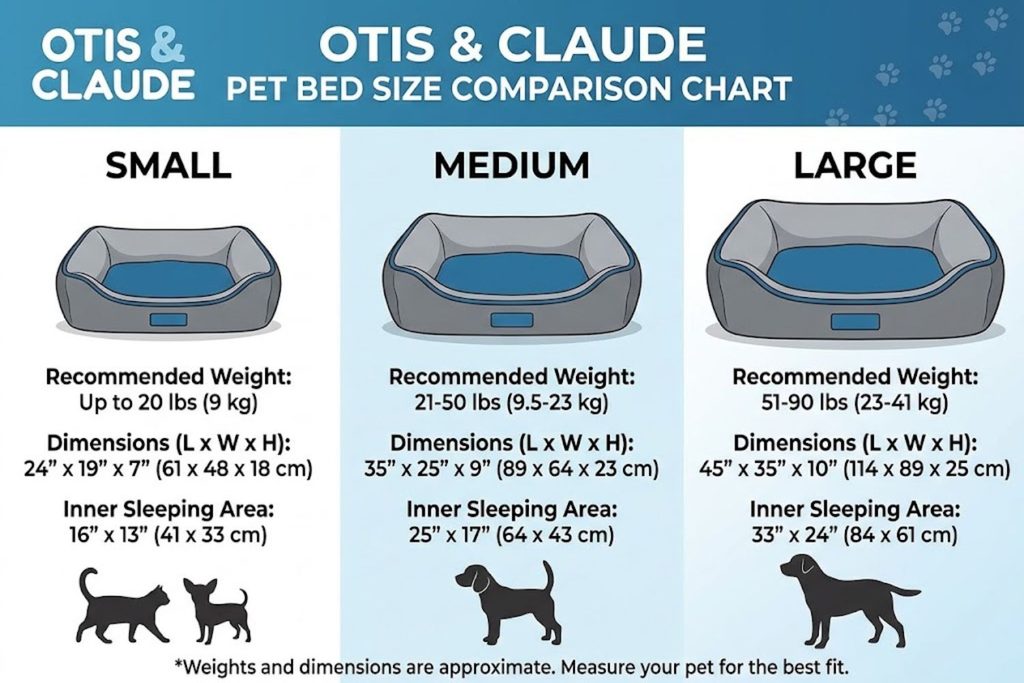
Recommended Pet Sizes & Weights
Small Bed (24″x18″):
- Dogs up to 15 lbs
- Cats of any size
- Elderly or small-breed dogs
Medium Bed (36″x27″):
- Dogs 15-40 lbs
- Multiple cats
- Dogs who like spreading out
Large Bed (48″x36″):
- Dogs over 40 lbs
- Large or giant breeds
- Multiple pets sharing
Critical: A bed that’s too small forces your pet into uncomfortable positions. Too large and they won’t feel the security the bolsters provide. The rule is simple: your pet should be able to curl up fully with some stretch room.
Best Breeds for This Bed Design
This bed excels for:
- Large Breeds: Labradors, Golden Retrievers, German Shepherds benefit from the substantial support and size options
- Senior Dogs: Low entry is transformative for aging pets
- Joint-Sensitive Breeds: Dachshunds, Basset Hounds, other long-backed breeds prone to spinal issues
- Cats: The mid-size offers perfect proportions for cats who like bolstered nesting
- Multi-Pet Setups: Large size can accommodate pets who like sleeping together
Multi-Pet Households
The larger sizes work well when pets are bonded. One Large bed can accommodate a dog and cat pair, or two medium-sized dogs. The bolsters create separate nesting spaces even in shared beds.
Care, Maintenance & Durability
Machine Washable Cover System
The cover removes via zipper or velcro, allowing easy washing without dealing with the entire bed:
- Wash Temperature: Cold or warm water (check label)
- Cycle: Gentle or delicate (protects fabric integrity)
- Detergent: Regular pet-safe detergent works fine
- Drying: Air dry to preserve fabric quality, or low heat tumble dry
The fill layer stays dry, reducing drying time and extending bed life.
Long-Term Durability & Replacement Parts
Quality companies plan for longevity. Otis & Claude offers:
- Replacement Covers: If the cover wears (fabric fades over 5+ years), buy a new cover rather than replacing the entire bed
- Bolster Refresh Options: Some retailers offer refurbished bolster sets
- Warranty Support: Check manufacturer warranty for defects
This modular approach extends effective lifespan to 7-10+ years.
Stain Resistance & Cleaning Tips
Accidents happen. The hi-tech cashmere resists staining better than standard materials:
Fresh Accidents:
- Blot immediately (don’t rub)
- Spray with enzymatic pet odor spray
- Blot again
- Wash cover on next cycle
Set-In Stains:
- Treat with pet-specific stain remover
- Let sit 15-30 minutes
- Rinse and wash
Urine Odor:
- Enzymatic cleaners break down uric acid crystals (unlike regular detergent)
- Air drying in sunlight kills remaining bacteria
The washable cover system makes this manageable—you’re not dealing with a permanent-pressed bed that can’t be properly cleaned.
Real-World Scenarios: Who Should Buy This Bed?
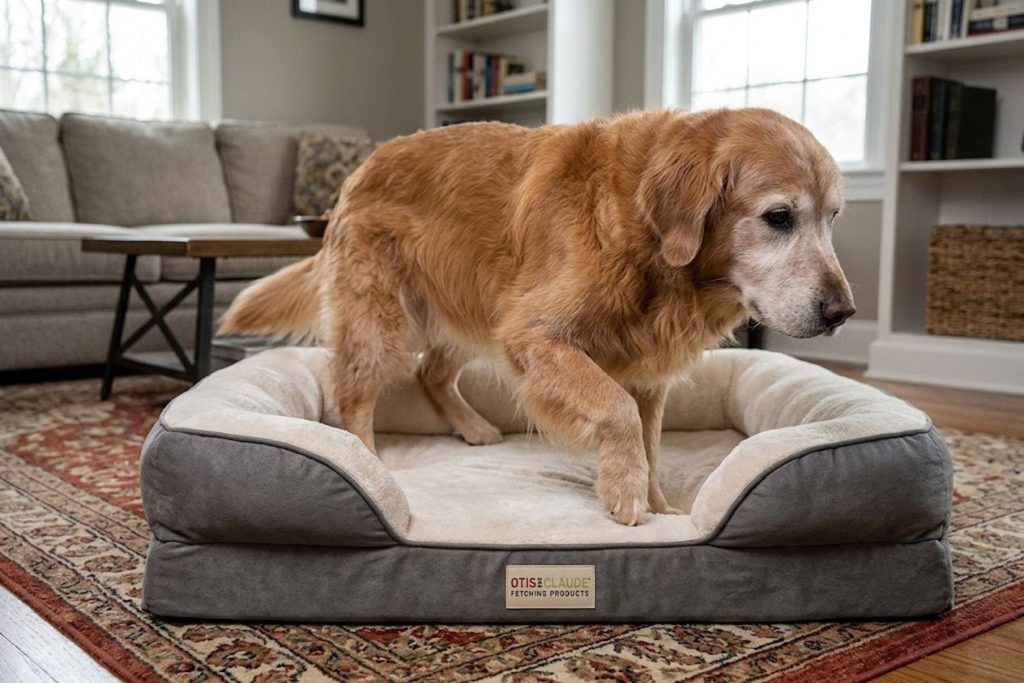
Senior Dogs Needing Joint Support
The Scenario: Your 10-year-old retriever moves stiffly in the morning. She winces getting up. Vet ruled out serious pathology—it’s just age and arthritis setting in.
Why This Bed Matters: The combination of orthopedic support and low-entry design eliminates pain points. She can get in and out without that full-body strain, and the bed supports her joints while she rests. Many owners report their senior dogs sleeping longer and moving more comfortably within days.
Cats Seeking Premium Comfort
The Scenario: Your cat spends 16 hours sleeping but seems to move between different spots looking for the “perfect” place.
Why This Bed Matters: Cats are notoriously picky about sleeping surfaces. The Otis & Claude’s mid-size offers the enclosed-feeling cats naturally prefer, while the cashmere is soft enough to satisfy their fastidious nature. Many cats gravitate to this bed and stay put rather than bouncing around your home looking for optimal comfort.
Pets with Sensitive Skin
The Scenario: Your dog scratches constantly. Vet checked for parasites and infections—it’s allergies or sensitive skin.
Why This Bed Matters: Standard bedding harbors dust mites and bacteria that trigger inflammation. Cashmere’s natural resistance to microbial growth removes this irritant. Combined with easy washing, your pet has a consistently clean sleeping surface. Owners report measurable improvements in itching and skin health.
Design-Conscious Pet Owners
The Scenario: You have an aesthetic standard for your home. A garish pet bed would be visual assault.
Why This Bed Matters: The Otis & Claude doesn’t compromise design. It’s a handsome piece that looks intentional, fits modern interiors, and doesn’t scream “pet product.” Your home maintains its aesthetic while your pet gets premium comfort.
Installation & Setup
Unboxing & Assembly
Most Otis & Claude beds arrive compressed:
- Unbox: Remove bed and let it sit for 2-4 hours at room temperature
- Fluff: The fill naturally expands to full loft
- Inspect: Check for any shipping damage (rare)
- Place: Position in a draft-free, quiet location your pet frequents
No tools required. No assembly. The bed arrives ready to use.
Optimal Placement in Your Home
Where you put the bed affects whether your pet will use it:
- Quiet Corner: Away from household traffic
- Temperature Stable: Not near AC vents or heating elements
- Accessible: Your pet shouldn’t have to navigate obstacles to reach it
- Elevated Slightly: On a floor, not immediately against a wall (pets like seeing the room)
- Natural Light: A spot where sunlight reaches during the day (pets like warmth)
Avoid placing it in kitchens, laundry rooms, or high-activity areas where stress from household activity could prevent relaxation.
Getting Your Pet Acclimated
Some pets immediately love the bed. Others need encouragement:
- Place Familiar Items: Put a toy or blanket with familiar scents on the bed
- Positive Association: Reward your pet for showing interest (treats, praise)
- Gradual Transition: If switching from another bed, place both nearby initially
- Don’t Force: Let your pet discover it’s comfortable; forced bed training doesn’t work
- Time Investment: Give it 1-2 weeks for habits to form
Most pets adapt quickly once they experience the comfort.
Frequently Asked Questions
Q: Is the Otis & Claude Hi-Tech Cashmere Pet Bed worth the premium price?
A: If your pet will use it for 5-7 years (the realistic lifespan), the per-year cost is actually lower than replacing cheaper beds annually. More importantly, the health benefits—better sleep, joint support, improved skin health—create value that extends your pet’s quality of life, particularly important for older animals.
Q: How often should I wash the cover?
A: Wash monthly for regular use, or more frequently if you have an incontinent pet or frequent accidents. The removable cover system makes this practical.
Q: Will my cat actually use this bed, or will she ignore it?
A: Cats are selective, but the bolstered design and soft cashmere appeal to feline nature. The mid-size bed (36″x27″) works particularly well for cats because it balances openness with the enclosed feeling they prefer.
Q: Can I use this bed outdoors?
A: The fabric is durable, but UV exposure will fade it. If you use it outdoors, position it in a shaded area and bring it inside overnight. The fill can retain moisture, so outdoor use requires good drainage and quick drying.
Q: What if my pet has accidents? Can the bed be saved?
A: Yes. The removable cover goes in the wash. The underlying foam/fill layer should be treated with enzymatic cleaner and air dried. The bed is recoverable from virtually any accident short of total saturation.
Q: How does this compare to orthopedic memory foam beds?
A: Memory foam provides excellent support but traps heat. Cashmere provides good support while naturally regulating temperature. Memory foam lasts 3-5 years; cashmere beds last 5-7. Memory foam is heavier (harder for mobility-limited pets to get into); cashmere is lighter. Both are valid, but they prioritize different benefits.
Q: Is this bed suitable for puppies?
A: Yes. The low entry and supportive design work well for puppies learning house training (easy to supervise and clean). The cushioning is firm enough that growing puppies don’t get too-soft support that could compromise development.
Q: What’s the warranty on the Otis & Claude Hi-Tech Cashmere Pet Bed?
A: Typical warranties cover 1-2 years against manufacturing defects. Check the specific retailer for exact terms, as coverage varies. Quality construction means defects are rare.
Q: Can I return it if my pet doesn’t like it?
A: Most retailers offer 30-90 day returns. This is important for expensive purchases. Give your pet 1-2 weeks to acclimate before deciding.
Q: How do I know what size to buy?
A: Measure your pet when fully curled up, then add 6-8 inches in each direction. That gives you the minimum bed size. Oversizing is better than undersizing.
Q: Is the fabric hypoallergenic?
A: Yes. The hi-tech cashmere and polyester fill are both hypoallergenic and dust-mite resistant, making this bed excellent for pets with allergies.