If you’ve just grabbed an iPhone 17 Pro Max, you’re holding one of the most advanced smartphones ever made—and one of the most expensive. Yet most people spend less than five minutes choosing a case. This matters. The right case isn’t just about protection; it’s about preserving your device’s resale value, maintaining usability, and preventing costly repairs that often exceed $300.
This guide doesn’t rank cases by marketing claims. Instead, we’ll examine what actually protects your iPhone 17 Pro Max, what trade-offs you’re making with every choice, and how to match a case to your real-world lifestyle.
Understanding Case Protection Ratings & What They Actually Mean
Not all protection claims are equal. When you see “military-grade protection,” understand what’s actually being tested.
MIL-STD-810H Drop Test Standards are industry gold—but misunderstood. This military standard tests devices falling from 10 feet onto concrete. Most case manufacturers conduct these tests, but results vary dramatically based on drop angle, surface material, and which part of the device hits first. A case that passes rigid testing can still fail during a fall at an awkward angle onto a sharp edge.
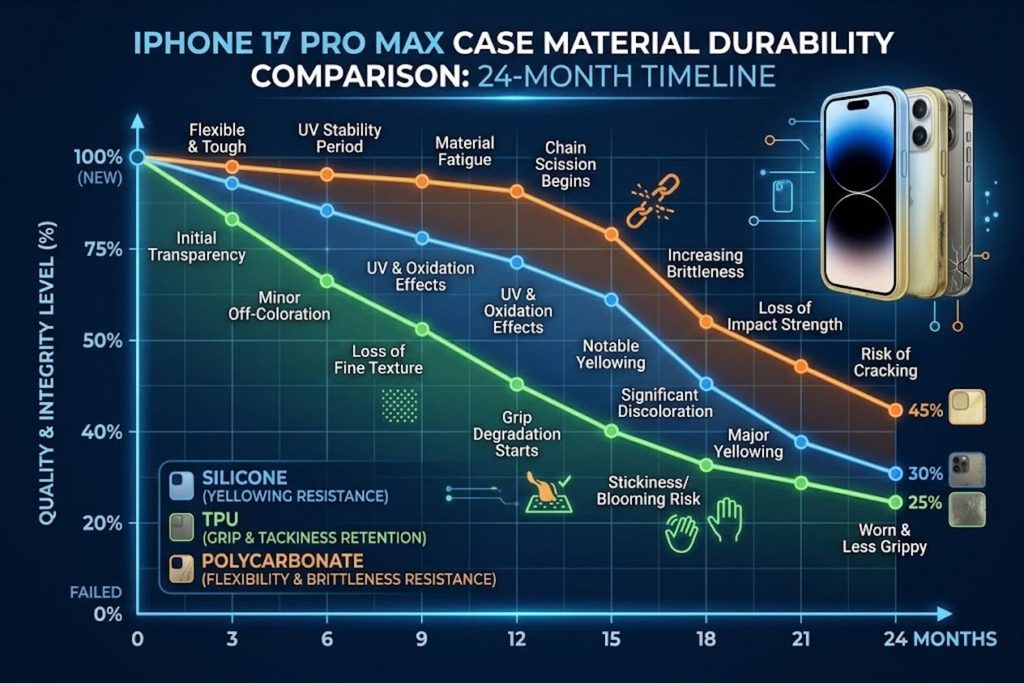
Material durability ratings measure how a case material performs over time. Silicone, for example, maintains excellent grip when new but degradates predictably within 18-24 months. Hard polycarbonate becomes brittle and more prone to cracking as UV exposure increases.
The critical insight: protection isn’t static. Your case protects differently in month one versus month eight, and manufacturers rarely mention this degradation timeline.
Case Material Types: Durability, Weight & Long-Term Wear
Silicone vs. TPU: Why Material Choice Matters
Silicone cases offer excellent initial grip and shock absorption. They mold slightly to drops, distributing impact force. But here’s what case manufacturers don’t highlight: silicone yellows, especially with UV exposure. Within 12 months, your pristine white case likely shows visible discoloration.
TPU (thermoplastic polyurethane) is silicone’s technical superior. It resists yellowing better, maintains grip longer, and costs less to manufacture. Yet it’s marketed less prominently because “TPU” doesn’t sound as premium as “premium silicone.”
Real-world durability: TPU cases typically outlast silicone by 6-12 months before grip degradation becomes noticeable.
Hard Polycarbonate: Protection vs. Brittleness
Rigid polycarbonate cases excel at scratch resistance and sharp-impact protection. They don’t absorb shock as effectively as flexible materials, instead transferring impact forces through the frame—which is why high-impact drops sometimes crack polycarbonate cases rather than flexible ones.
The tradeoff: maximum scratch protection, inferior shock absorption.
Leather: Aesthetic Appeal and Real Aging
Apple’s Leather cases are genuinely beautiful and develop character as they age. But leather requires maintenance. Without occasional conditioning, leather dries, cracks, and separates from the underlying plastic frame.
Cost reality: A $60 leather case needs replacement every 2-3 years, while a $25 TPU case lasts similarly if maintained.
Hybrid Materials: The Best of Multiple Worlds
Premium cases combine hard polycarbonate backs with flexible TPU frames and bumpers. These maximize both scratch and drop protection. The downside is higher cost ($40-$100) and additional bulk.
iPhone 17 Pro Max Compatibility: Beyond Basic Fit
Not every case-for-iphone-cases fits your iPhone 17 Pro Max equally. Precision matters.
Camera Ring Design is critical. The iPhone 17 Pro Max’s camera ring is a prominent design element that cases must accommodate. Poor cutout tolerance creates gaps where dust accumulates. Excessive cutout space compromises camera protection. Premium cases engineer this to 0.5mm precision.
MagSafe alignment directly affects accessory function. Misaligned magnets cause wireless chargers to fail or charge at reduced speeds. Built-in magnets are more reliable than cases with adhesive magnetic rings that degrade over time.
Action button accessibility matters if you use this customizable button. Some cases obstruct it slightly, requiring stronger presses. Test cases in-store if possible.
Charging port tolerance affects USB-C connector fit. Tight cases sometimes create pressure on the connector, and repeatedly inserting charging cables can damage internal contacts.
Protection Levels Explained: Choosing the Right Coverage
Slim Cases: Style Over Maximum Protection
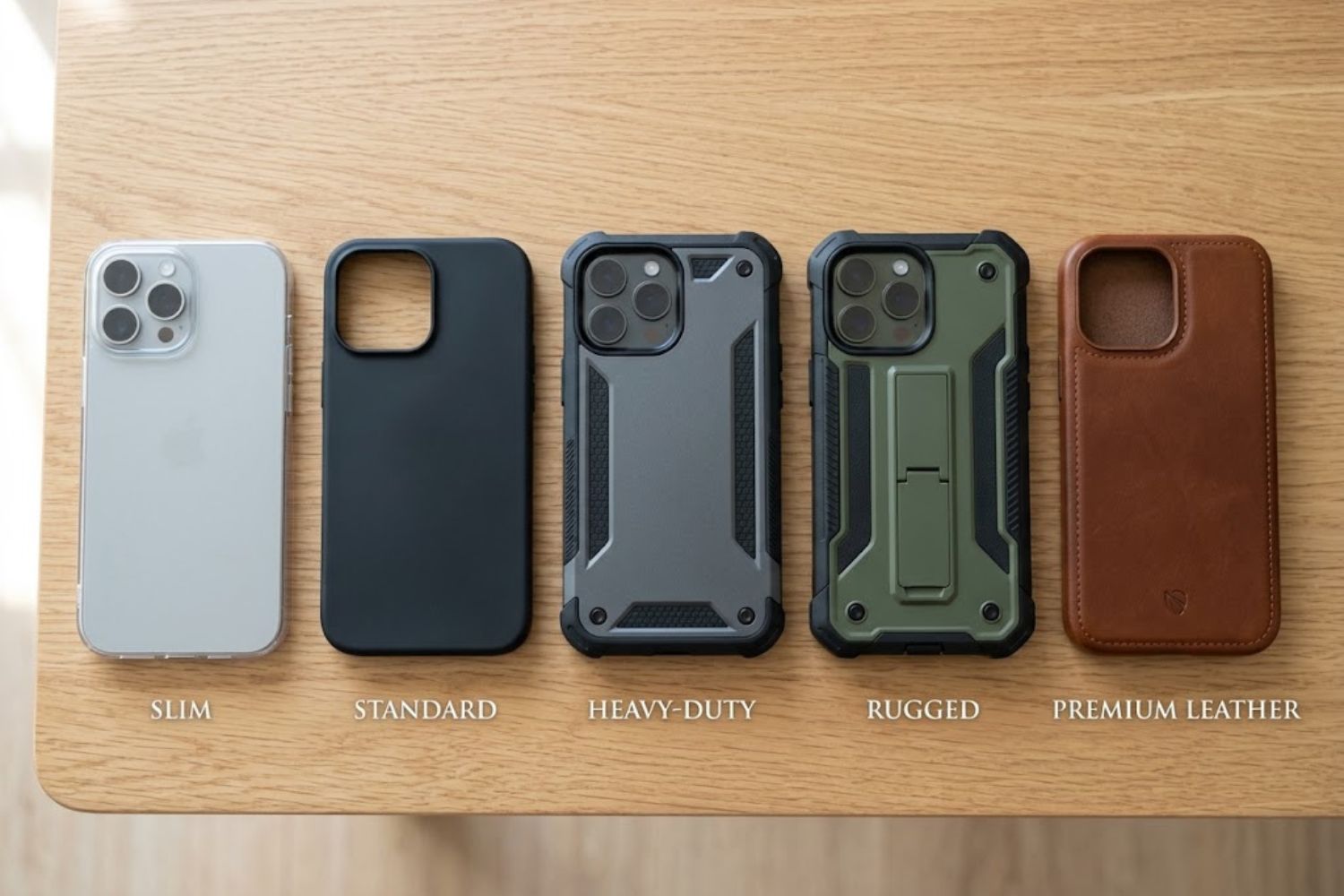
Slim cases add minimal thickness and weight. They protect against scratches effectively but offer limited shock absorption. Apple’s official silicone cases fall into this category.
Best for: Desk-based professionals who rarely drop phones, urban office environments.
Standard Cases: The Protection-Usability Sweet Spot
Most popular cases provide moderate bumper protection (5-7mm corners) plus back protection. They’re practical and reasonably protective.
Best for: General users, everyday carry, balanced protection needs.
Heavy-Duty Cases: Maximum Protection with Trade-offs
These cases feature thick, reinforced bumpers (10-12mm) and rugged designs. They’re heavier, bulkier, and reduce touchscreen responsiveness at edges.
Best for: Outdoor workers, construction environments, frequent droppers.
Rugged Cases: Purpose-Built for Extreme Conditions
Military-spec rugged cases include shock-absorbing cores, reinforced corners, and sometimes integrated screen protectors. They’re heavy, expensive ($80-$150), and impact both phone size and usability.
Best for: Marine environments, construction sites, extreme sports.
The Hidden Factor Nobody Discusses: Case Longevity & Wear Patterns
Your iPhone 17 Pro Max will likely remain functional for 3-4 years. Will your case?
Silicone yellowing is inevitable. UV exposure accelerates this, turning white silicone cases noticeably yellow within 8-12 months. This is purely aesthetic but affects perceived phone condition.
Grip erosion happens to all flexible materials. The texture that provides excellent grip when new smooths over 12-18 months with daily use. Hands perspire, oils accumulate, and friction decreases. This actually increases drop risk as time passes—counterintuitively, older cases become less protective.
Corner stress points fail predictably. Material flexing at bumper corners eventually causes small cracks. These typically start at 18-24 months and gradually worsen.
Color fading affects darker cases significantly. Black absorbs solar heat, accelerating material degradation and color change to dark gray or brown.
Durability ranking (best to worst): Hard polycarbonate → hybrid materials → TPU → silicone.
Design Features That Actually Impact Daily Use
Raised Bezels: Real Screen Protection
Bezels raised 1-2mm above the screen meaningfully prevent screen cracks during flat drops. Every millimeter matters. Cases without this feature don’t protect screens during horizontal impacts.
Texture and Grip
Textured backs reduce accidental drops. Polished surfaces are beautiful but slippery—especially when hands are wet or perspiring. Silicone and TPU provide better grip than polished polycarbonate.
Weight Distribution
Heavier cases (80-150 grams) cause hand fatigue during extended use. Most people don’t notice this initially but will after weeks of daily carry.
Bulk Factor
Cases increase phone thickness by 2-4mm. This seems minor until you try pockets, car mounts, and phone stands designed for unpadded phones.
Value Assessment: Cost Per Month of Protection
Not all expensive cases offer better long-term value.
Budget cases ($15-$25) typically last 12-18 months. Cost per month: $1-$2.
Mid-range cases ($30-$60) average 18-24 months. Cost per month: $1.50-$3.
Premium cases ($60-$150) vary dramatically. An Apple leather case might last 24 months ($2.50/month), while some designer cases fail within 12 months ($5-$12/month).
Calculation: If you replace a case every 18-24 months, mid-range cases typically offer the best value-to-protection ratio.
Matching Case Type to Your Lifestyle
Professional Settings: Slim, professional-looking cases. Prioritize appearance and minimal bulk.
Outdoor & Active Users: Standard or heavy-duty cases with excellent grip and corner protection.
Minimalists: Slim cases or even no case (accept the device risk).
Parents Purchasing for Children: Heavy-duty or rugged cases; the additional cost justifies reduced damage risk.
Common Case Mistakes That Damage Your Phone
- Poor fit causing screen edge gaps → Dust and moisture enter, screen damage becomes more likely
- Inadequate camera ring protection → Scratches destroy the optical quality subtle
- Using non-MagSafe-compatible cases → Reduces accessory functionality, wireless charging fails
- Ignoring dust accumulation → Particles grind into ports and speakers over months
Installation, Maintenance & Longevity
Installation: Align the case carefully; forcing corners can damage the device. If it doesn’t slide smoothly, check alignment.
Maintenance: Clean cases quarterly with mild soap and water. For leather, use leather conditioner every 3-4 months.
Replacement: Replace cases when grip noticeably decreases, cracks form, or yellowing becomes visible. Typically every 18-24 months.
Recommendations for iPhone 17 Pro Max Users
Best Overall Value: Mid-range hybrid cases combining hard back with TPU bumpers ($35-$50). They balance protection, durability, and cost.
Best Durability: Hard polycarbonate-based cases from established manufacturers. Plan to replace in 24+ months.
Best Aesthetics: Apple’s official silicone cases or premium brands like Casetify. Accept 12-18 month replacement cycles.
Best for Heavy Use: Heavy-duty cases from OtterBox or Spigen ($50-$80). Overkill for most but genuinely protective.
The bottom line: Your iPhone 17 Pro Max deserves protection, but the “best” case depends entirely on how you use your phone, your aesthetic preferences, and your budget. Choose based on real durability timelines and your actual lifestyle—not marketing claims.
❓ FAQ SECTION
Q1: How much protection do iPhone cases actually provide?
A: Cases prevent scratch damage effectively and reduce screen breakage risk during drops by 60-80%, depending on drop height and angle. However, extreme drops (8+ feet) can damage phones even in heavy-duty cases. Cases primarily prevent cosmetic damage and minor impact damage.
Q2: Will a silicone case yellow, and can I prevent it?
A: Yes, silicone yellows from UV exposure within 12 months. Prevention is limited; UV-protective clear cases resist yellowing longer. TPU cases yellow less noticeably. Acceptance or regular replacement every 12-18 months is practical.
Q3: Is MagSafe worth the extra cost?
A: MagSafe adds $10-$20 to case cost but enables a growing ecosystem of accessories (mounts, chargers, wallets). If you’ll use these accessories, the investment is worthwhile. If not, standard cases are cheaper.
Q4: What’s the difference between a $20 case and a $100 case?
A: Budget cases typically fail within 12 months; premium cases last 18-24 months. Material quality, corner reinforcement, and edge finish improve at higher price points, but the protection improvement isn’t proportional to cost after $50-$60.
Q5: Can thick cases damage my phone?
A: Very thick cases (over 12mm) can create pressure on the device frame during drops, potentially causing internal damage. Moderate thickness (5-7mm) is optimal.
Q6: How do I know if my case is damaging my phone?
A: Excessive pressure from tight cases can damage the battery connector. If your phone shows rapid battery degradation, investigate whether your case fits too tightly. Watch for small deformation in the device frame.
Q7: Are leather cases worth the investment?
A: Leather cases are beautiful and develop character but require maintenance and last only 2-3 years. They’re worth it if you enjoy the aesthetic and don’t mind replacement cycles; TPU offers better durability-to-cost ratio.
Q8: Does a case affect wireless charging speed?
A: Cases up to 3mm thick have negligible impact. Thicker cases (5-7mm) may reduce charging efficiency by 10-15%. Metal or carbon fiber cases prevent wireless charging entirely.
Q9: What case material is most eco-friendly?
A: Biodegradable materials and recycled plastics offer environmental benefits, though durability is generally lower. If environmental impact matters, replacing a durable case less frequently (longer lifespan) is ultimately more eco-conscious.
Q10: Should I use a screen protector with my case?
A: Modern Gorilla Glass is durable enough that separate screen protectors are optional. Use one only if you repeatedly drop your phone or work in abrasive environments. Otherwise, a case with raised bezels provides adequate protection.
Q11: Can I return a case if the fit isn’t perfect?
A: Yes, most retailers offer returns within 30 days. Test fit in-store if possible before purchasing; otherwise, return early if fit is poor. Forcing an ill-fitting case can damage your device.
Q12: How does phone size affect case choice?
A: The iPhone 17 Pro Max is large (6.9 inches), making bulk more noticeable. Users of larger phones should prioritize slim or standard cases rather than heavy-duty options; the bulk-to-benefit tradeoff is worse for larger devices.
Q13: Do colored cases fade over time?
A: Yes, especially dark colors in sunlight. Black fades to dark gray; blue fades to lighter shades. Clear cases remain consistent but can yellow. If color consistency matters, prioritize brands with UV-resistant dyes.
Q14: What’s the lifespan of a typical iPhone case?
A: Standard cases: 18-24 months before grip degrades noticeably. Silicone: 12-18 months. Hard polycarbonate: 24-30 months. Replacement depends on visual degradation, grip loss, and damage accumulation.
Q15: Is it worth buying an expensive branded case?
A: Premium brands (Apple, OtterBox, Casetify) offer marginally better materials and finish, but durability improvement is minimal after $50-$60. The primary difference is aesthetics and brand prestige, not protection.